





« BACK  |  PRINT

RS

MEMBER DIARY

Paul Krugman’s Romantic View of Health Care

An open letter to Paul Krugman

Dear Mr. Krugman,

In regards to your recent blog post maintaining that “patients are not consumers,” and what’s more that such a depiction of a relationship is “sickening” — your romantic image of health care, apparently garnered from too many viewings of ER, House M.D., or perhaps General Hospital, apparently consists of handsome wisecracking surgeons facing a barrage of patients bleeding out or dealing with obscure, life-threatening conditions.

Medical care is an area in which crucial decisions — life and death decisions — must be made; yet making those decisions intelligently requires a vast amount of specialized knowledge; and often those decisions must also be made under conditions in which the patient is incapacitated, under severe stress, or needs action immediately, with no time for discussion, let alone comparison shopping… There’s a reason we have TV series about heroic doctors, while we don’t have TV series about heroic middle managers or heroic economists.

This is both ludicrous and incorrect, painting a picture where visits with a medical professional are always preceded by a call to 911 and a trip on a blaring ambulance — which is the experience for approximately zero Americans, anywhere. I would be eager to learn of any of your research showing otherwise.

A simple glance at a cost breakdown of the American health care system eradicates your fanciful depiction. According to the U.S. Department of Health and Human Services and the Agency for Healthcare Research and Quality, as much as 75% of health care costs in the United States are due to chronic conditions. Administrative costs alone take up nearly 10% of the national pie chart. As the U.S. population ages, the management of these long-term conditions takes up the overwhelming portion of responsibility for the rising costs of care — according to the Kaiser Family Foundation’s research, the average American over the age of 64 spends vastly more on health care services than any other age group, roughly $9,000 per year — and despite the massive increase in taxpayer subsidies, private health insurance remains the largest source of health spending.
Krugman and Muse
Your incorrect view of the nation’s health care reality is, in fact, one of the chief reasons for problems with the current system, which was originally designed in the 1930s to cover catastrophic events, not chronic conditions, predictable treatments, and long-term care. As a 2009 report in McKinsey Quarterly notes, “The fundamental nature of medical risk in the United States has changed over the past 20 to 30 years — shifting away from random, infrequent, and catastrophic events driven by accidents, genetic predisposition, or contagious disease, and toward behavior- and lifestyle-induced chronic conditions. Treating them, and the serious medical events they commonly induce, now costs more than treating the more random, catastrophic events that health insurance was originally designed to cover.”

Employer-based insurance, which made sense when people had one or two employers in a lifetime, now separates consumers from price signals and eliminates transparency in the marketplace, and results in a situation where people are overinsured for some risks and underinsured for others. America today is burdened with a nonsensical health care system where government-driven incentives warp the decision-making process of individuals, and doctors are expected to work essentially for free.

The small steps taken toward market approaches which allow for expanded individual choices have shown positive results, and progress toward cost-reduction without sacrificing coverage, as individuals make decisions based not on artificial systems constructed by agencies, but on their own priorities and needs. Yet these positive examples were completely ignored under President Obama’s new nationalized health care regime.

There is some irony in your mistake and in his, in that the government-managed coverage systems you favor are perhaps at their worst in providing responses to the life-threatening illnesses you apparently think all of us are faced with on a daily basis. In fact, in the absence of on-demand treatment of consumers, they turn serious yet treatable illnesses into death sentences. The United Kingdom, under CMS director Donald Berwick’s beloved National Health Service (he openly confesses “I am a romantic about the NHS”) in which consumer power is extremely limited by law, has created a cancer mortality rate more than 38 percent higher than America’s. For example, in the UK, women with breast cancer have a 46 percent mortality rate, compared with only 25 percent in the U.S., and while only 19 percent of men in the U.S. who get prostate cancer die of it, in the U.K. it kills 57 percent.

Of course, the U.K. was recently touted by the Economist Intelligence Unit for ranking at the top in one category, thanks in large part to the abundant provision of painkillers as opposed to extended treatment: quality of death. That’s what the beau ideal of government-run health care gets you, Mr. Krugman — a system in which patients have no ability to act as consumers, where providers do not have to compete for their business, where individuals are treated too late and all that the system will allow is to give them some painkillers to make them comfortable before they die.

Such approaches might make for good television scenes, but they make for terrible policy.

Best Regards,

Benjamin Domenech
Research Fellow, The Heartland Institute

P.S. A colleague suggests that you ought to try re-reading what you have written, replacing medical care with, say, aviation, and then repeat your conjecture.

COMMENTS

  • msctex

    The guy is fast becoming an asset, as a prime example of the True Believing, Kool-Aid besotted Progressives currently more or less in charge of the country.

    It is good to have him around, as there are still many people who refuse to believe just how far removed from Reality people like Krugman actually are. Let him rave. People are catching on.

  • lineholder

    When individuals such as Mr. Krugman make these kinds of statements…I often wonder whether they are truly that ignorant of what really goes on in our health care industry or whether they are simply trying to mislead the American public into believing that socialized health care is a better option.

    Either way, the hard cold reality is that PPACA (i.e. Obamacare) has major flaws, which will be displayed for the all the world to see soon enough. It will NOT generate an effective health care system. It WILL contribute to an even greater increase in costs. It WILL cause the quality of care to decrease. Even in terms of “good socialized health care programs”, we wouldn’t be able to compete. It is truly that horrendous.

    We have to get the truth out there to the public day after day after day.

  • http://theminorityreportblog.com Repair_Man_Jack

    That paragraph about how the risk factors have changed but our responses haven’t is worth money. Congrats!

  • Bartlett

    I heartily endorse your words.

    Patients are most certainly consumers. They absolutely do balance medical care expenses against food, gasoline, and entertainment. And for most of them, most of the time, medical care isn’t even on the first page of priorities.

    For patients with chronic disease or who are facing life-threatening episodes, they still have to deal with costs and availability, with how much they like one physician or dislike another. Medical care is infused with relationships and preferences, just like any other personal service.

    Perhaps the most telling thing about those television series featuring heroic physicians is how completely absurd they are. When I was in medical school, those of us with street experience (ex-EMTs and paramedics are common in med school) used to gather and laugh every week at ER. It regularly lived up to the old phrase “so bad it’s not even wrong.” Paul Krugman’s invocation of these pathetic dramas is telling.

    Excellent medical care is quiet, personal, thoughtful, and informed not just by knowledge of disease but by knowledge of the people being served and their preferences and wishes. Socialized medicine has never once achieved this pinnacle except by sheer infrequent accident. The reason is simple: no matter how much you wish it were so, or how strong your vision is of heroic government bureaucrats providing constant access to heroic television-style doctors, it’s just a vision. And the reality is inevitably gray, soulless, and doomed to deliver mediocrity for an astonishing price.

    • lineholder

      of how this legislation will influence the patient-doctor relationship.

      I’m on the Health Information/Quality Application side of the health care fence. This sector of the industry has so many challenges in front of us during the next few years. If I believed that the transition to ICD-10 would lead to greater improvement in the quality of care and new advancements in positive forms of treatment, I’d be excited beyond all words to see it happen.

      But with the introduction of a socialized health care system, the likelihood is greater that the increased specificity of ICD-10 will lead to identification and elimination of even more treatments and prevention of advancement for costing purposes.

      So a part of me is dreading the change. I’m dreading it more than words can say.

    • http://twitter.com/bdomenech Ben Domenech

      Shoot me an email if you would at bdomenech [at] heartland.org.

    • aesthete

      It’s the sort of statement that a college freshman would make — a throwaway assertion that Krugman doesn’t even attempt to explain, much less provide evidence for. If I wrote that some market or other did not have consumers in an economics paper of any kind, I would never hope to be taken seriously ever again. Krugman has become a man-child for whom emotional statements have taken precedence over factual discussion. It’s sad to see his decline from the 90s.

      • aesthete

        I wonder if Krugman would allow a conservative to so blithely cite the existence of “heroic military” TV shows to support an argument for more military spending (despite the fact that the military at least corresponds to being a public good in a way that health care does not).

  • http://theminorityreportblog.com Repair_Man_Jack

    Have you trademarked that? If I could borrow it one morning when I write an entry, I’d be appreciative.

    • Bartlett

      … but it’s originally attributed to physicist Wolfgang Pauli (one of the ones who worked on the Manhattan Project). I poach only from the best.

  • http://charlemagne-the-hammer.blogspot.com/ DerKrieger

    I’m fortunate enough to work for a company that offers high deductible plans with a companion HSA. I am most definitely a consumer.

    With my HSA I was able to get Lasik last year. I was finally able to afford it because the free market brought the price down from $2000/eye to $1200/eye.

    I have a minor allergy that is more annoying than harmful and made an appointment to see an allergist. The test to determine ti what I was allergic was $750. I told the doctor that I’d live with the minor irritation and that his test wasn’t worth my $750.

    I exercised my free choice in both of the above situations.

    Yes Paul, we are in fact consumers.

  • davenj1

    First, Paul Krugman is an unabashed tax and spend liberal so anything he says has to be taken with a grain of salt. Actually, the more the speaks or writes (since in every interview I have seen with him, he less speaks than blubbers), the greater ammunition for our side. If this is his view, for example that “patients are not consumers,” then they are not in any conceivable way engaged in commerce and thus Congress has no Constitutional authority to regulate health care. Thanks, Paul, for the argument…
    Secondly, the fact that both he and Obama have won Nobel Prizes simply sullies that institution. They should stick to the hard sciences and leave peace and economics out of it.

    • rickbull

      since they gave one to Yasser Arafat . . .

      • Diogenes314

        Some of the other great men to receive the award (well before Arafat)…

        Fritz Haber-”Father of chemical warfare”
        Antonio Egas-pioneered the ‘theraputic’ prefontal leucotomy.
        Cordell Hull-”Father of the United Nations”

        Giants all.

  • indyooper

    My favorite Paul Krugman Health Care moment:

    http://www.youtube.com/watch?v=3EPd2i4Jshs

  • PaladinLostHour

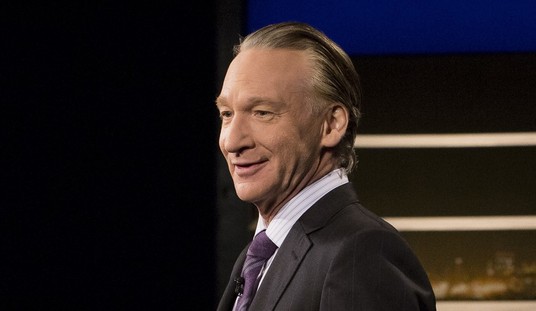
    Knew it. This photo makes Krugman look like the illegitimate son of James Bond supervillian Ernst Stavro Blofeld:

    http://withfriendship.com/images/i/42197/ernst-stavro-blofeld-was.jpg

  • jiminga

    he just chooses to ignore facts he doesn’t agree with, proving that “economist” is not a profession but a belief system.

    • http://theminorityreportblog.com Repair_Man_Jack

      http://www.independent.org/blog/index.php?p=10237

    • Diogenes314

      The worst kind-a well educated one. The eminence in question embraces both neo-mercantilism and Keynesian economics.

      That’s a whole lot of industrial strength stupid.

  • mark92691

    “There is some irony in your mistake and in his …”

    No, it wasn’t a mistake. Krugman knows full well that socialized medicine is a disaster. He just doesn’t want you to know it.

  • seattlesam

    Arriving at the ER with chest pain isn’t the time to start competitive bidding for your immediate care. In this, Krugman is right. That’s when the life or death rapid decisions must be made.

    But Krugman reveals his absolutely shallow understanding of markets and competition. He lacks the experience and creativity to see that competition happens when a person chooses an insurance plan and health care network, not when on the ER gurney. Liberals always get this wrong because it’s a great scare tactic and because they don’t understand markets.

    Choose an HMO plan if you want to save money. Perhaps the HMO doctor is somehow less prepared to handle your ER arrival with chest pain, but perhaps not, since there’s a huge overlap between caregivers and various plans. You are no worse under an HMO than under Medicare, after all.

    Krugman also exposes his lack of understanding of insurance economics. Please, any Red State actuaries out there jump in. I will bet the first actuary with solid numbers a nice bottle of wine that the actuarial cost of massage therapy coverage is higher than the actuarial cost of treating heart attacks. Here’s my analysis: one way to avoid moral hazard is to insure against INFREQUENT/UNLIKELY risks that have UNPLEASANT consequences when they occur. Nobody chooses to have a heart attack (infrequent/unlikely and unpleasant).

    But massage therapy for my stressful job? Pleasant and as frequent as possible, please. (My King County–Seattle–librarian friend has 50 massages per year in her county health plan…how many should she consume? Even assuming a discounted insurance rate of $40/massage, that benefit would cost $2000/year. No way her actuarial cost of health insurance for heart attack approaches $2000.)

    But Obamacare builds in just these kinds of special-interest costs without allowing consumers to shop for a more appropriate level of mandate. Krugman has little idea of which he speaks.