

TEN YEARS HAVE passed since terrorists hijacked airliners and flew them into the World Trade Center and the Pentagon. In that period, America has fought wars in Iraq and Afghanistan, carried out hundreds armed drone attacks in Pakistan and Yemen (among other locations), and conducted covert operations around the world, all in the name of what President George W. Bush termed the “Global War on Terror.” Terror plots and attempted attacks have been foiled, terrorist leaders have been killed or captured in massive numbers – including the world’s most wanted terrorist himself, Osama bin Laden. All of this has combined, in the words of President Barack Obama, to “put al Qaeda on the path to defeat.”
Given all this, is it possible that America is actually losing the war on terror? In Bin Laden’s Legacy: Why We’re Still Losing the War on Terror, Daveed Gartenstein-Ross, director of the Center for the Study of Terrorist Radicalization at the Foundation for Defense of Democracies, argues not only that we are losing, but that we as a nation still fail to understand what kind of a war we are fighting, and what our enemies’ actual goals are. This is a powerful indictment, and Gartenstein-Ross painstakingly lays it out in a book that is both sharply analytical and accessible to any audience.
A KEY PROBLEM with America’s attempt to wage a War on Terror while safeguarding itself from future attack, Gartenstein-Ross writes, is that our ignorance of the enemy we are facing has allowed us to pursue both goals in a profligate fashion that plays right into the hands of an enemy that sees America’s economy as the long-term target. To understand the reasoning behind this, we must look to the Soviet Union. Though myriad factors contributed to the dissolution of the U.S.S.R., its collapse so shortly after its withdrawal from a decade-long quagmire in Afghanistan helped convince Osama bin Laden and other former mujahedeen that they had been the cause of its ultimate defeat.
Now, al Qaeda has taken this strategy of embroiling a much larger and wealthier enemy in a long and costly war of economic attrition and has aimed it at the United States, with no small measure of success gained over the last decade. “Even though it has lost Osama bin Laden and its safe haven in Afghanistan,” the author writes, al Qaeda’s “fight against America is broader, and al Qaeda and its affiliates are key players in more regions than they were engaged in a decade ago…Meanwhile, the U.S. economy is shattered, it faces an almost unthinkable debt burden, and its policy makers have largely been consigned to arguing with each other on the sidelines while the country’s traditional allies…are overthrown or see their power erode” (p. 200).
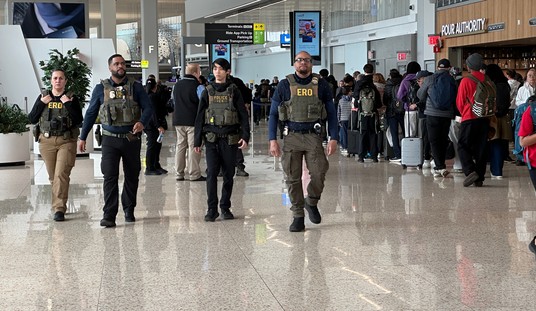
IN BIN LADEN’S Legacy, Gartenstein-Ross frequently employs an Ali-Foreman “Rumble in the Jungle” analogy, suggesting that America’s post-9/11 counterterrorism strategy, such as it is, has taken on the character of a superpower exhausting its expansive but finite resources in a fight against an enemy that is largely resting against the ropes and waiting for the opportune time to strike. One area in particular in which this strategy can be seen is airline and airport security, an area in which the U.S. has made massive expenditures over the last decade.
“After the 9/11 attacks, the United States poured enormous sums of money into bolstering aviation security,” Gartenstein-Ross writes. “Yet time and again, terrorists affiliated with al Qaeda have shown how just a bit of technical ingenuity can thwart these expensive defenses” (p. 4). Examples of this span the post-9/11 period, from the 2001 ‘shoe bomber,’ Richard Reid, to the 2007 sports drink suicide plot in the U.K., to ‘underwear bomber’ Umar Farouk Abdulmutallab’s 2009 attempt to bring down a Northwest Airlines flight bound for Detroit. This ability of “al Qaeda’s operatives…to find vulnerabilities in aviation security, which has been hardened far more than any other set of targets,” speaks to the impotence of America’s current strategy of throwing money and technology at our problems (p. 203).
THAT THIS PLAYS right into our enemies’ hands can be seen, for example, in the aftermath of al Qaeda in the Arabian Peninsula’s (AQAP) successful attempt to slip bombs disguised as printer cartridges past airport security and onto FedEx and UPS cargo planes bound for the U.S. Though the bombs were found before reaching their destination and being detonated, Gartenstein-Ross writes, AQAP still considered the effort a success, as their mere $4,200 investment (a number that was splashed across the cover of a special issue of the group’s English language magazine Inspire) would likely cause Europe and America billions in additional security technology and manpower to ensure such an attempt did not succeed again. As AQAP itself acknowledged, their current strategy against the West is the “strategy of a thousand cuts,” each of which costs them very little to produce, but provokes a massive and costly response. In sum, the author writes, “al Qaeda’s strategy is…to make the United States collapse under the weight of its own defenses” (p. 203).
However, Gartenstein-Ross cautions, understanding that strategy and coming to grips with America’s misjudgment of al Qaeda’s goals in its fight against the West is only the beginning. “Al Qaeda is an adaptive organization,” he writes, whose leaders not only believe that “relatively small and inexpensive adaptations will continue to thwart its enemies’ defenses,” but that “each time it slips an operative past the security measures designed to detect him – even if that operative doesn’t succeed in killing a single ‘infidel’ – it will force costly and intrusive adaptations upon its adversary” (pp. 202-3).
Beyond his evidence-based analysis of al Qaeda’s strategy against the U.S., Gartenstein-Ross deserves significant credit for including proposed solutions for the issues currently facing America in the War on Terror, particularly at a time when so many articles, books, blog posts, and tweets are dedicated only to identifying, describing, or repeating problems. Many of his prescriptions are quite solid, and address specific shortcomings that the author has previously identified in America’s planning and execution of the War on Terror. Examples include understanding al Qaeda’s strategy and its adaptability; reducing the expense of national security through common-sense but difficult-to-implement measures like profiling, analytic reform, and civil service reform; avoiding involvement in military engagements of uncertain scope and purpose, like the 2003 invasion of Iraq, which the author believes severely crippled our efforts in Afghanistan, and the 2011 Libya no-fly zone; and reducing our dependence on foreign oil, though this is obviously easier said than done, and some issue may be taken with the specifics of the author’s recommendations.
However, if Bin Laden’s Legacy has a shortcoming, it is in the real-world practicality of the recommendations made in the longest of these sections, on “Address[ing] the Politicization of Terrorism” (pp. 203-210). There is no question that, as the author notes, terrorism and security have been used to various ends by both political parties, and that such politicization of the issue has led to what may best be described as a spending contest in the name of being strong on terror while perpetuating the myth of a “zero-risk” paradigm, part because to not do so would be to open oneself up to ruthless attack from the political opposition.
While the current (and historical) “hotly contested partisan atmosphere” makes sober reevaluation of our strategy and priorities in the effort to defeat terrorists abroad and prevent terrorism at home, though, the likelihood that any type of “strong moderate center” brought together to “bring sanity and a sense of purpose to…discussions” on America’s counterterror efforts would be able to actually influence policy is, to put it mildly, very low (pp. 208-9). Blue-ribbon and academic panels are not in short supply, and very few come out with recommendations that are both sound policy-wise and politically viable. Furthermore, the emergence of moderates does not necessarily drive centrist compromise; instead, it can have the effect of pushing the debate toward one or the other extreme, as those who gravitate toward that center are countered by a political opposition that sees an opportunity to be taken advantage of.
This weakness, though, is a tiny chink in the book’s otherwise solid armor. Bin Laden’s Legacy is a book which should be read not only by private citizens seeking to learn about the goals that drive al Qaeda and its allies, but also by the strategists and policymakers who have, to date, misjudged and misread our enemies in the War on Terror. Through all of Gartenstein-Ross’s evidence and analysis, the chief lesson that should be learned from Bin Laden’s Legacy is just how important it is to understand the goals and nature of our enemies, so that we don’t end up playing right into their hands by responding to threats in a way that is natural for us, but inappropriate for the situation. Though this lesson may seem obvious, as Bin Laden’s Legacy clearly demonstrates, that which should be obvious is definitely not always so.
Bin Laden’s Legacy by Daveed Gartenstein-Ross (ISBN 978-1-1180-9494-5; $25.95) is published by John Wiley & Sons.















Join the conversation as a VIP Member