« BACK  |  PRINT

RS

MEMBER DIARY

Doug Mataconis Repeats Dean Acheson’s Folly

The self-infatuated Doug Mataconis has lined up in predictable “Conservative” support for Barack Obama’s suggestion that we balance the budget by cutting defense. He offers up three fatuous arguments below.

1.There is no nation on the planet that poses a real threat to the United States in the way that the USSR during the Cold War….That’s not to say that there aren’t threats out there, but the idea of any nation posing existential threat to the United States is, I think, off the table

2. Our allies (the U.K., France, Saudi Arabia, Germany, Japan, and the vast number of nations that make up “Other”) can afford to pay more toward their own defense than they are now.

3. We could afford to make serious cuts in our defense budget without threatening our own security.

(Doug Mataconis, OBCit.)

Like all good political propaganda, Mataconis winds his arguments around a certain kernel of truth. The PRC probably couldn’t challenge the US to an all-out, existential war and destroy Kansas. If both nations walked into Thunderdome, I doubt that the Chinese would leave. Yet that assumes that the security of the United States extends no further than preventing the Vandal Hordes from burning down Congress and The White House.

Mataconis might not be able to afford the electricity that permits him to spew talking points on his blog if the US military wasn’t involved in at least 100 different things that would not meet his implicit standard for military threats. If you enjoy the economic, cultural and social benefits that come with when you live in Modern America, than you’d better be glad that the legions stand watch atop Hadrian’s Wall. Our lifestyle and comfort today result directly from America’s economic dominance. Enemies can take an awful lot of things away from us before they get anywhere close to depriving us of our physical territory.

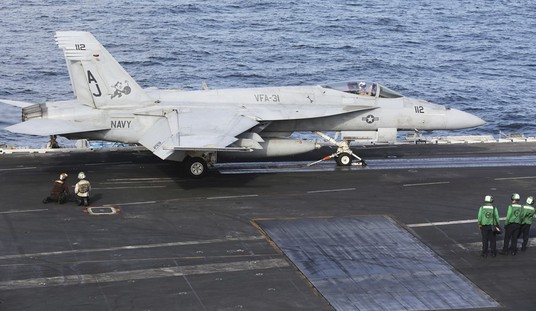
On Mataconis’ second point, he may also have some justification. However, his conclusion is problematic. The United States invests a lot of time and effort in preserving the trade routes of the world. One of the reasons that the world is as rich as it is stems from the fact that anyone who shuts down a major artery of trade and commerce does so at the risk of rather violent punishment at the hands of a US Navy Carrier Group.

Mataconis closes his argument with the presumption that we can make serious cuts to the defense budget without effecting US security. I argue that we can and probably should cut defense, but that we cannot do so without increasing our level of security risk. We cut defense in a trade space. When we specify what we will defend, people around the world listen eagerly and take notes. In calling for a limited list of defendable threats, Mataconis commits the same gaffe Dean Acheson did prior to the tragic event known as the Korean War.

On 12 January, 1950 and Secretary of State Dean Acheson spoke on America’s security commitment in The Far East. After laying out a moral case for a continued military presence in the region, he then committed the vital error of specifying the perimeter he felt America should defend.

The defensive perimeter runs along the Aleutians to Japan and then goes to the Ryukyus. We hold important defense positions in the Ryukyu Islands, and those we will continue to hold. In the interest of the population of the Ryukyu Islands,…The defensive perimeter runs from the Ryukyus to the Philippine Islands.

– Dean Acheson

This perimeter excluded The Korean Peninsula. The dictator of North Korea heard this and took it as a sign that the United States would not willingly come to South Korea’s defense. Soon afterwards, the Korean Peninsula was the scene of horrible conflict. Had Acheson satisfied himself by saying that the United States would strongly defend its perceived national interest in the Far East with vigilance, the North Koreans may well have never seen fit to move on Seoul.

Thus, when Mataconis implies that we should only be funding defense against other nations that pose immediate, existential threats to the Continental United States, he is allowing the interested listener to assume a lot of other actions hostile to our wellbeing are totally fair game. Don’t believe for a second that people like the current band of kleptocrats in North Korea won’t parse that fatuous statement and try their mischief against us again.

It may well be that significant reductions in defense spending will be required to save America’s spendthrift wastrel government from future economic collapse. If so, than defense spending must and will be significantly reduced. But everything we cut (with the exceptions of Jack Murtha’s and Jim Moran’s detestable earmarks) will make life more dangerous for Americans. Each and every cut will make our world a less safe planet upon which to live.

Military spending is tied to specific missions. It can be reduced some to take out “wedges” and “cushions”. But once these small instances of fraud and bureaucratic gamesmanship are excised, every dollar taken out becomes another mandated mission that the US military can no longer undertake. Seriously cutting defense means seriously reducing the extent to which the United States can use its military to effectively safeguard modern civilization. We will have to pick and choose what we hand over to the barbarians with precision and care.

The cavalier and stupid assumption, made by chuckle-heads such as Doug Mataconis, that America’s defense and security are directly correlated to what the Chinese spend on computer hacking and submarines; will eventually make us and our children far less safe. What is required here is a carefully-planned and wise reduction in what missions our senior leadership commit our military forces to assuming in the first place.


COMMENTS

  • Death_of_the_Donkey

    never intended for us to project our military might around the world in the first place. To your point about protecting trade routes, I would bet that the Chinese might have even more at stake should trade be choked off and thus should be willing to foot more of that bill as well. The fact is that we spend way too much on defense and cuts there need to be a big part of any real deficit reduction plan. In other words, Doug Mataconis is absolutely correct.

    • http://theminorityreportblog.com Repair_Man_Jack

      In sense would the world be as safe or as prosperous a place to live if the US wasn’t doing far more than the founding fathers ever intended our defense forces to do. The post WWII reconstruction of Japan and Germany would have been totally immoral within the framework of George Washington’s entangling alliances speech. As would our efforts against the Soviet Union during the Cold War.

      Defense will undoubtably be reduced, but needs to be sone so with sober realistic understanding that you do a pay a price in increased risk and decreased wealth and safety every time such a reduction is made. It becomes a cost benefit analysis. How much risk do you acknowledge in return for xxBn saved? Which ones do you take?

    • streiff

      in history.

      We were founded as a mercantile nation and, at the time of our founding, that was understood to include force projection. Under Adams we fought the Quasi War against France. Under Jefferson and Madison we fought the Barbary Wars. So under at least three of the Founders we did what you alleged they didn’t mean.

      • Death_of_the_Donkey

        The Founders absolutely expected us to defend our shipping (hence the call for a standing Navy) and to pursue pirates (also in article 1, section 8). What they never intended was for us to pursue nation building policies and to have a standing army of the size, scope, and cost that we have today. In fact, in Federalist 46, Madison discusses the unlikelihood of us ever funding an expansion of the military during peace time across numerous administrations as a reason to support the idea that we would have garrisons and the right to raise armies when Congress deemed necessary beyond the point of just staffing garrisons and border defense (because other Founders actually were arguing that the only time we should be able to raise an army was during an actual war).

        • Aaron Gardner

          The authorities essential to the common defense are these: to raise armies; to build and equip fleets; to prescribe rules for the government of both; to direct their operations; to provide for their support.

          Hamilton goes on to say:

          These powers ought to exist without limitation, because it is impossible to foresee or to define the extent and variety of national exigencies, and the correspondent extent and variety of the means which may be neccasary to satisfy them

          Sounds like “Peace through Strength” to me.

          What Hamilton, and many of the other Founders, understood, is that the extent of power is properly limited in correlation to the object being administered. You seem to be missing this key bit of context in arguing that the Founders didn’t believe in projecting their strength.

          • Death_of_the_Donkey

            Hamilton argues that

            “If we are wise enough to preserve the Union we may for ages enjoy an advantage similar to that of an insulated situation. Europe is at a great distance from us. Her colonies in our vicinity will be likely to continue too much disproportioned in strength to be able to give us any dangerous annoyance. Extensive military establishments cannot, in this position, be necessary to our security.”

          • Aaron Gardner
          • Death_of_the_Donkey

            That quote is absolutely not out of context, as the preceding paragraph was discussing that Britain didn’t need a large standing army precisely because its navy and the island itself kept it apart from continental Europe and thus it needed less of a defense since it could raise militia if necessary due to the logistics of another country invading. He further went on to posit that if Britain was part of the continent it would have to have a larger army due to the proximity of its neighbors. The quote from above describes the exact position the US is now in since we have vanquished all continental threats.

          • Aaron Gardner
    • Darin_H

      Of course the Founders never intended for us to project our military might around the world in the first place.

      Like, say, to the shores of Tripoli? Or Maybe the Halls of Montezuma? And that’s just the Marines.

      • http://www.hakubi.us/ Neil Stevens

        Don’t do his homework for him.

        Oh wait, streiff told him the answer too. darn.

        • http://theminorityreportblog.com Repair_Man_Jack

          was repudiated scant years after left office. George was a really cool guy and all, but he’s very lucky that the French and the Spanish didn’t view foreign affairs in the same way he did. Otherwise, Marquis de Lafayette would have been told to sip his soup cooler and remain in France.

          • http://www.hakubi.us/ Neil Stevens

            He didn’t say don’t get into alliances. He said don’t get into entangling alliances.

            He was right that we should stay out of the petty European power politics, advice Woodrow Wilson ignored.

            He was also right not to rule out alliances of necessity, such as NATO against the Soviets.

          • http://theminorityreportblog.com Repair_Man_Jack

            That would make more sense than the modern interpretation of it you get from history class. I remember more than one teacher of mine at least implying that we shouldn’t be opposing communism based on the Washington Farewell Address. (That also proves conclusively that I was in grade school when dinosaurs roamed the Earth.)

          • streiff

            We had a mutual defense treaty with France during Washington’s administration.

            Washington was referring specifically to the danger of the US being drawn into the French Revolutionary War on the part of France because of a rather understandable antipathy towards Britain by a lot of Americans.

            Read for yourself beginning at para 31.

    • http://www.hakubi.us/ Neil Stevens

      Study history.

      • Death_of_the_Donkey

        “To raise and support Armies, but no Appropriation of Money to that Use shall be for a longer Term than two Years;

        To provide and maintain a Navy;”

        It is quite clear that the Founders never intended on us having a permanent army lying around costing us a fortune to maintain and begging to be used. They were operating from the experience of the British following the Seven Years War that almost bankrupted that country and wished to avoid a similar fate.

        Alexander Hamilton made this argument very clear in Federalist #26, when he declared that (in defense of the two year rule):
        “It has been said that the provision which limits the appropriation of money for the support of an army to the period of two years would be unavailing, because the Executive, when once possessed of a force large enough to awe the people into submission, would find resources in that very force sufficient to enable him to dispense with supplies from the acts of the legislature. But the question again recurs, upon what pretense could he be put in possession of a force of that magnitude in time of peace?”

        Now, while he was specifically in this instance discussing liberty in terms of actual freedom, one can easily argue that liberty (and freedom) also can be determined in monetary figures, as those tax dollars required to support a bloated military in peace time well beyond that which is necessary to defend our country is exactly the kind of thing Hamilton reasoned couldn’t happen. Of course, Hamilton’s argument predates the defense industry and their lobbyists who insure the continued existence of many of these firms on the backs of the taxpayer regardless of our actual benefit from the spending in question.

        • juumanistra

          It is quite clear that the Founders never intended on us having a permanent army lying around costing us a fortune to maintain and begging to be used. They were operating from the experience of the British following the Seven Years War that almost bankrupted that country and wished to avoid a similar fate.

          No. Had the Founders never intended for there to be a permanent federal army, the Constitution would not have given the federal government the power to raise and maintain one during peacetime in the first place. Rather, while the Founders did have a distaste for standing armies and the tyrannical role that were accustomed to taking, they saw fit to leave the matter up to the House of Representatives: You will note that the appropriations schedule in Art. 1, Sec. 8 tracks with the election of the House, meaning that a standing force will always have its appropriations subjected to approval by a new Congress. As the House is the most representative arm of the government, this always struck me as a rather sound compromise between the necessity of maintaining a permanent presence on land and the problems traditionally associated with standing armies.

          • Death_of_the_Donkey

            since we had to man garrisons and forts on the frontier. What they never intended was for a large standing army to exists beyond what was necessary to defend our immediate borders or to put down an invasion/rebellion. That is very clear from the Federalist papers (as a matter of fact, the Founders thought it was highly unlikely that anyone would even want such an army to exist in the first place). They believed that we would rely on the Navy (and through technology one could argue air force) to protect US trade interests abroad.

          • Aaron Gardner
          • Death_of_the_Donkey

            “If we are wise enough to preserve the Union we may for ages enjoy an advantage similar to that of an insulated situation. Europe is at a great distance from us. Her colonies in our vicinity will be likely to continue too much disproportioned in strength to be able to give us any dangerous annoyance. Extensive military establishments cannot, in this position, be necessary to our security.” (also quoted above).

            Hamilton definitely foresaw a future where threats from invasion were reduced (like today) and that thus an extensive military would not be necessary.

          • Aaron Gardner

            I wonder why you didn’t provide the rest of that paragraph? Probably because the context destroys your argument.

            Federalist 8 has Hamilton stating why we must have a national military for the Union rather than militias for the many states in a Confederacy. The wisdom that Hamilton was speaking of was the wisdom of unity. This Union would, and it’s military, would create the insulated nation that isn’t at war with itself due to jealousy between the states.

            Hamilton goes on from where you stopped and says:

            But if we should be disunited, and the integral parts should either remain separated, or, which is most probably, should be thrown together into two or three confederacies, we should be, in a short corse of time, in the predicament of the continental powers of Europe – our liberties would be a prey to the means of defending ourselves against the ambition and jealousy of each other.

            You also act as if there has been no advancement in warfare over the last 200 years. What took months in the 1790′s takes minutes now.

            Isolationism, and all its various offsprings became nothing but a suicide pact the day the ICBM came into existence. Hamilton would have acknowledged this.

          • Death_of_the_Donkey

            What Hamilton is quite clearly saying is that by becoming a union we would in fact need a smaller army because we wouldn’t have to defend against other potential enemies (ie different confederacies) on our own shores/neighbors. His argument is twofold; one, that as a union with time we would be able to overcome any potential threat by our neighbors due much to the geography of our location and two, that only through becoming a union can we accomplish this since as separate confederacies we would always need to have larger armies. Hamilton is most definitely advocating a long term view that a nation without immediate invasion threats should have a much smaller army than one situated amongst its enemies.

          • Aaron Gardner

            Assuming it therefore as an established truth that, in case of disunion, the several States, or such combinations of them as might happen to be formed out of the wreck of the general Confederacy, would be subject to those vicissitudes of peace and war, of friendship and enmity with each other, which have fallen to the lot of all neighboring nations not united under one government, let us enter into a concise detail of some of the consequences that would attend such a situation.

            Hamilton’s comparisons to Europe were meant to be a warning about how America would look with out the Union.

            FYI, your last sentence ignores a reality that Hamilton would have acknowledged…. invasion is no longer a slow process, nor does it have to be the only act that constitutes an exigent threat.

          • Death_of_the_Donkey

            to Hamilton’s argument that without the union we would look like Europe was the point that by becoming a union we would need a much smaller standing army.

          • Aaron Gardner

            You.Are.Wrong.

          • powertothepeople

            Donkey make claims as to what Hamilton meant or what he envisioned the size and yet his claims are not backed in reality.

            The United States population during 1780 was 2,780,400. Active personnel was 60,000. The ratio of military to civilian was 1/46. Even at its lowest peak right before the civil war, 16,000, the ratio was still under 1/100. Add in the app 340,000 inactive military personnel during this time, your ratio goes to 1/7

            Our active military as of 2010 was app 1,445,000 and 833,616 inactive/reserve. Our population was 308,745,538 giving an active personnel ratio of 1/214 and a combined military ratio of 1/136.

            Hamilton and the United States had a much larger standing military then we do now when considering population and active personnel. Those numbers also do not take into consideration such things as size of country that needs defending since during those days the country was much smaller, the worldwide threats we deal with today, the ease a country could attack us, modern technology, etc. Taking all those things into consideration, the size of our military would be found lacking by Mr Hamilton himself. If he felt having a military of that size compared to population was needed, I would bet he would be just fine with the size it is today and would maybe even try to make it bigger.

          • Aaron Gardner
        • Aaron Gardner

          Federalist 29

          There is something so far-fetched ans so extravagant in the idea of danger to liberty from the militia, that one is at a loss whether to treat is with gravity or with raillery; whether to consider it as a mere trial of skill, like the paradoxes of rhetoricians; as a disingenuous artifice to instil prejudices at any price; or as the serious offspring of political fanaticism.

          • aesthete

            Militias were generally either impromptu groups of citizens defending themselves, or a state registrar listing the men who could serve as a militia. Your other Federalist quote upthread was more apropos for the subject, methinks.

          • Aaron Gardner

            Hamilton was discussing the militia in the hands of the federal government. So in this case your general rule isn’t so.

            The context of the discussion dictates the meaning of militia in this instance to be the army.

          • aesthete
        • streiff

          this was actually a radical departure from English practice in which the army was only funded for one year at a time.

          The idea was to keep the army dependent upon Congress for funding. You’ll not no similar concern with the navy.

          Hamilton also predates ships powered by diesels and gas turbines, radar, airplanes, ICBMs, etc.

          • Death_of_the_Donkey

            without impacting either our safety here or our trade. When Bush took office the defense budget was something like $400 billion/year (in nominal dollars) and we are no safer today than we were then (we were quite safe in both periods of time). I am not saying that we do not need to invest in defense (or defense technology), but that we simply do not need those investments in the size and scope they are today (ie the marginal increase in safety (if there is one at all) for every additional dollar spent is minimal (ie the law od diminishing returns applies to military spending just like anything else)).

          • Aaron Gardner
          • Death_of_the_Donkey

            and low levels of military spending that caused 9-11? Or is it that our increased military spending is preventing someone from driving across the Mexican border with a nuke in his trunk?

          • Aaron Gardner
          • streiff

            I might agree with you but nothing you’ve said thus far convinces me that you’re doing anything more than moving the goalposts to walk back a rather exotic argument.

          • Death_of_the_Donkey

            stands. I believe that:

            1) we can cut a significant amount of monies from the current defense budget (excluding the additional amounts for Iraq/Afghanistan)

            2) that our marginal return in safety for each defense dollar spent is both diminishing and costly above 2001 spending levels

            3) that the founders never intended for us to nation build halfway around the world or keep substantial garrisons in allied countries that have their own armies during times of peace (ie projection of our power), nor did they intend us to act as a world police force

            4) defense cuts must be on the table to have any real hope of a balanced budget in the short term

          • Aaron Gardner
          • Death_of_the_Donkey

            what my argument is better than I do. Military strength is part and parcel to the Constitution (hence the clause for a permanent navy to defend us among other things), however, military strength to defend us and military strength necessary to nation build are two very different levels of spending and investment and my argument is that we are spending at a level consistent with nation building as opposed to one for defense and thus cuts could easily be made without jeopardizing our safety in the slightest way. We had military strength back in 2000, but we now have nation building strength.

          • Aaron Gardner
          • juumanistra

            Well, either your first point just left a heffer’s rump, or it is sufficiently vapid as to be a platitude. Can significant amounts of money be cut from the defense budget? Of course. All defense spending is discretionary, so you could theoretically zero it tomorrow the help of 218 Representatives and 50 Senators plus Joe Biden. But the same could apply to all spending, and I suspect that’s not your point. In what context, then, can significant sums be cut form the defense budget? As I’ve been arguing with Repair Man Jack lower in the thread, most of the costs of the current force structure are baked into the cake and significant savings can’t be achieved without a fundamental reformation of the military, which would invariably include a not-insubstantial amount of downsizing. You’re certainly entitled to, in light of your views of the Constitution, think there should be large reductions in defense appropriations. But to say “we can cut a significant amount of monies from the current defense budget”, with an implicit assumption that such could be done with no consequences, is patently false.

            Your second point is non-falsifiable. Hell, how do you even go about trying to argue, let alone model, that? As it boils down to: “We’re spending more today on defense than FY2001. I feel less safe today than FY2001. Ergo, all expenditures above FY2001 suffer from diminishing returns.” Such confuses correlation and causation massively, which is made all the worse by the fact that you’ll never untie the Gordian knot of causality in the first place. And then there’s the fact that Defense is, by itself, sufficiently large that it’s almost impossible to untangle what funding imperatives produced what changes. Procurement and operations budgets are way, way percentage-wise compared to FY2001: Under your argument, every one of these dollars suffers from diminished utility. Which is a rather novel argument indeed for defense appropriations, as it basically says that all money spent enhancing the Pentagon’s capabilities or — Heaven forbid! — actually deploying the military produces less in the way of security than if the money used to fund such had been left in the Treasury.

          • Death_of_the_Donkey

            To paragraph one:

            Defense is no different that social security or medicare in that current costs are baked into the cake and that we need a fundamental “reformation” of these programs to downsize them, but that doesn’t mean that we shouldn’t downsize just because we have to reform things (in any of the three spending areas, defense, medicare, or social security). You are essentially arguing that change would be difficult so we shouldn’t do it.

            To paragraph two:

            Diminishing returns is a true state where incremental increases bring less utility than the initial ones (ie the 1000th aircraft carrier provides less incremental defense than the first). The use of 2001 was simply because I new what the level of spending for that year was off the top of my head, but we could easily use another number (either bigger or smaller and the point would be the same). As for the idea that “actually deploying the military produces less in the way of security than if the money used to fund such had been left in the Treasury” that isn’t the issue at all, the issue is whether the diminished incremental increase in security we get from that dollar is worth more to the country than the economic benefits we get from the lower debt/deficit/taxes/etc by not spending that dollar at all.

          • juumanistra

            Defense is no different that social security or medicare in that current costs are baked into the cake and that we need a fundamental ?reformation? of these programs to downsize them, but that doesn?t mean that we shouldn?t downsize just because we have to reform things (in any of the three spending areas, defense, medicare, or social security). You are essentially arguing that change would be difficult so we shouldn?t do it.

            “Downsize” was in the context of the alluded to discussions with RMJ, which refers to absolute reductions in force size. Which, to restate here if you haven’t trawled down that way, are that there are few savings to be had in the defense budget for structural reasons stemming from personnel and procurement. If you want to effect serious reductions in defense outlays, it means one of two things: Either large cuts in the force size — as in lopping off three or four CVBGs, disbanding multiple USAF wings, reorganizing Army divisions, and other large-scale efforts of that sort — or dulling the technical edge by adopting cheaper, less bleeding-edge equipment. “Serious”, for point of reference, is on order of 25% or greater: Cuts of the sort that the Left will demand in the opening negotiations on any kind of long-term fiscal package with meaningful entitlement reform. I happen to think that both American technical sophistication and power projection are where they need to be, so I’m averse to the kinds of force reductions required to achieve those kinds of fiscal results. But the argument has nothing to do with the difficulty of the task.

            Diminishing returns is a true state where incremental increases bring less utility than the initial ones (ie the 1000th aircraft carrier provides less incremental defense than the first). The use of 2001 was simply because I new what the level of spending for that year was off the top of my head, but we could easily use another number (either bigger or smaller and the point would be the same). As for the idea that ?actually deploying the military produces less in the way of security than if the money used to fund such had been left in the Treasury? that isn?t the issue at all, the issue is whether the diminished incremental increase in security we get from that dollar is worth more to the country than the economic benefits we get from the lower debt/deficit/taxes/etc by not spending that dollar at all.

            I’m well aware of the concept of diminishing returns. The onus is on you to demonstrate that such defense funding above Point X achieves such. Given the immense difficulty in determining what the margin rate-of-return even is on security spending, let alone untangling the causal issues associated with increases to particular areas of defense, your burden is nearly insurmountable. Especially when you say that you pulled FY2001 out of thin air. You’re essentially positing a conceptually tool like the Laffer Curve: Something that is axiomatically true, but for which there is no real way to test one way or the other.

            On the latter point, re: deployment of the military, you’re the one who made the silly proposition in the first place. FY2001 was the final year of the Clinton procurement holiday: Procurement budgets, and subsequently operations budgets, have swelled since then due to Clinton’s kicking of the procurement can and the evolution of the War on Terror. To argue, as you did, that defense spending post-FY2001 suffered from diminishing returns was to argue that expenditure of funds to make good on all the procurement which the Clinton administration put off, as well as those expended for actually deploying troops into combat, produced less incremental security gain than if the money hadn’t been spent. Trying to make that argument vis-a-vis the Clinton procurement holiday is laughable on its face, by simple virtue of the fact that it lionizes what amounted to accounting gimmickry at the expense of force maintenance. Trying to make the latter about the deployment of military force is the kind of sophistry typically associated with the loopier species of libertine economics uber alles social thought.

            Or, in a more pithy way, diminishing returns is the wrong analytic lens for defense spending. To call it “exotic”, as streiff did, is being exceedingly generous and more fair-minded than I would have.

          • Death_of_the_Donkey

            since I am not a member of Congress or the president. And I could just as easily argue that our economic security is as (or more) important than our military security at this point and that while I may not be able to prove where an additional dollar of defense spending reaches a point where its marginal benefit makes its expenditure fruitless, I can argue that the marginal impact of that dollar is far greater currently applied to deficit reduction as opposed to defense, since it is quite apparent (just from reading Redstate) that everyone is afraid we are reaching our borrowing limit, while very few here are advocating a ramp up in defense spending.

  • Tbone

    people on a large scale basis. It would require us to use our technology to force other nations to comply with our wishes. However, unless they were absolutely convinced of our commitment to use that force to control their behavior it would be pointless.

    A perfect example is Libya. We have spent something north of $650 million in surgical type strike and have effected really no change. Nor, does it appear we are going to without boots on the ground.

    However, had we obliterated Baghdad with a nuke or two back in 1990, and thumbed our nose at world opinion, Iraq, Afghanistan, Iran, North Korea and Libya would never have been problems.

    However, we don’t, and I doubt will, have the stomach for such action. As such, we have to continue with the expense of conventional forces.

    As to the concept of threats, I can assure you that the release of a couple of ounces of anthrax in each of the top 30 commercial airports would kill our economy faster than even Obama and the Democrats with the keys to the mint.

    • http://theminorityreportblog.com Repair_Man_Jack

      Cato The Elder’s approach to Carthage is a whole lot cheaper than our approach to Libya. We could have a much cheaper defense budget by reconfiguring our forces to be capable of leveling every stacked piece of masonry visible on the horizon and nothing much else. That does have its limits, however.

      • juumanistra

        Were the United States to adopt a properly merciless military mindset, of the sort that is always attributed to us by the Left, defense would still be a major consumer of tax dollars. This is because we generally do not pay a premium for “smart” weaponry: Guided munitions would be craved by the Pentagon even in a world where we did not care in the slightest for collateral damage, because of the improved efficacy against conventional military targets they convey. Similarly, there would still be outlays required to maintain large numbers of technically sophisticated fixed-wing aircraft, as the Pentagon would likewise crave the warfighting benefits of modern avionics and turbofans, which do most of the driving of cost-inflation on combat aircraft. Nor would increasing the emphasis on artillery within the Army, given that such would produce unpleasant knock-on effects in terms of cost in order to maintain the Army’s current levels of operational mobility. No matter how one slices it, maintaining a warfighting technical base at the level on which the American armed forces operate is an expensive endeavor, no matter what its mission is: The only ways to significantly ratchet down the costs are to either downsize the total size of the armed forces or downgrade the technical sophistication of American forces. (This, incidentally, why I think a great many conservatives are ambivalent about defense cuts: The only way you see major reductions in defense spending of the sort that the Left will accept come from the above dynamic and there is no way to escape it.)

        • http://theminorityreportblog.com Repair_Man_Jack

          Level Iraq and leave it lying fallow and you save about $800Bn in operational costs. The reason I say that has its limits in my reply above because Iran crosses the border and sets up permanent shop in Basra the week after we leave. At that point, do we level Iran, or leave the Shiites in Iraq to their fate?

          Also, Optempo costs for deployement are a lot more than peacetime Optempo. An occupying army runs it equipment “on the edge” far more often than one that just levels the joint and then vanishes. Ghengis Khan saved a fortune by not caring too much what he left behind. It’s not the weapons systems you choose to procure, it’s how you use them that generates the savings.

          • juumanistra

            Level Iraq and leave it lying fallow and you save about $800Bn in operational costs. The reason I say that has its limits in my reply above because Iran crosses the border and sets up permanent shop in Basra the week after we leave. At that point, do we level Iran, or leave the Shiites in Iraq to their fate?

            Well, you could always break out the salting nukes: That’d solve the problem of the Iranians crossing the Shatt al-Arab, at least. Not particularly desirable for any of the parties, but it’d solve the problem.

            Also, Optempo costs for deployement are a lot more than peacetime Optempo. An occupying army runs it equipment ?on the edge? far more often than one that just levels the joint and then vanishes. Ghengis Khan saved a fortune by not caring too much what he left behind. It?s not the weapons systems you choose to procure, it?s how you use them that generates the savings.

            Oh, I concur re: peacetime vs. combat costs for OPTEMPO. But you’re wrong re: procurement. Modern Western warfare leverages the wealth of the West into capital-intensive force multipliers. Sometimes these are tangible, such as body armor and artillery; sometimes it’s intangible, such as the benefits reaped from the Navstar network or the information gathered by airborne sensor platforms. The point is that once your warfighting starts revolving around high-cost tools, how they’re used becomes increasingly less important from a budgetary perspective: An hour of flight-time logged by a F-15E is, from a cost perspective, identical regardless of whether it’s being used for training, launching a surgical strike, or being used to bomb anything that moves. Your major costs for that flight-time are the sunk cost of buying the jet and the costs of maintaining it, and said maintenance costs are basically the same whether it’s flying out of CONUS or Sicily.

            Where I think we’re having a bit a miscommunication is that I am hung upon this phrase of yours, Repair Man Jack: “We could have a much cheaper defense budget by reconfiguring our forces to be capable of leveling every stacked piece of masonry visible on the horizon and nothing much else.” My initial post was aimed at refuting such, in that even if we reconfigured the defense budget simply to level the enemy and then salt the ground, we would still have substantial defense costs because of the necessity of maintaining advantageous systems and force structures. To put it another way: We could already adopt such a policy, without changing a single organizational flow-chart at the Pentagon. The points you raise have nary a thing to do with force structure: Rather, what you are making (valid!) points about is operations policy. Or, more broadly still, points about strategic choices.

            Without wading into that briar patch — as I think that might border on threadjacking — I’d just note that, from a budgetary perspective, you cannot really plan for wars. Because, at the end of the day, war and peace are political questions: What you do with defense spending is provide the political decision-makers with a toolkit with which to prosecute foreign policy and pursuit of the national interest. You cannot know, in a given fiscal year, whether or not one of the particular tools will be used and so you only budget for your regular peace-time affairs, with operational funding coming in via supplementary allocations. This is why, when talking about “defense spending”, the operational costs of the War on Terror should be set-aside: To use the $800bn figure cited above to be saved by just leveling Iraq, a much smaller figure was absorbed by the Pentagon’s budget, and it is only that bit that was absorbed into the Pentagon’s baseline that ought to be talked about in terms of what fiscal cost-savings can be achieved in the Pentagon’s budget by adopting different operational methodologies.

          • http://theminorityreportblog.com Repair_Man_Jack

            Which is how you intelligently cut defense. Right now, our current warfighting doctrine pretty much puts us on the hook for anything that happens anywhere. (See Libya, eg.) We defend life, the universe and everything.

            The key to intelligently reducing our military budget is deciding which negative geopolitical outcomes we willingly throw up our hands and eat. Those are meta-level strategic choices. We live in a world of Mataconis-like people who love the principal of cutting defense, but who still whine like stuck pigs when something they don’t like happens in The Voltaic Republic.

          • juumanistra

            I am sorry that I let my inner wonk out of his box: He just get his panties in a knot whenever anyone, no matter their disposition, starts talking about how significant reductions in defense spending can be made via jiggering with the force structure. So you’ll have to pardon him — and me! — when the ranting on that subject comes up.

            I do agree wholeheartedly that the first step to reining in the operations budget is to establish a rational strategic framework within which to make geopolitical decisions. Whether one liked it or not, the Bush Doctrine of 2001-2004 was one such framework: If you aided the Islamists, the United States would use the tools at its disposal to punish you for such. It led to some rather odious happenings — the rehabilitation of the Qaddafi regime being one of them — but no one could question that it was an internally consistent framework through which decisions could be made. (Things went pear-shaped once the cult of force protection took over in Iraq and it just got worse after the Democrats were given some power.)

            On a somewhat different topic, I’d note that the reason I’m something of a defense procurement junkie is because we don’t talk about strategic choices much in this country. The last time we really had one was in the run-up to Operation Iraqi Freedom, and the memory of that shall be forever tainted because of the immense intellectual dishonesty of those on the Left and more craven politicos who wanted to dissociate themselves from whatever support they might have once lent the idea of deposing Saddam. Defense procurement functions as one of the proxies by which strategic policy dialogue occurs, as today’s procurement decisions determine tomorrow’s operational capabilities. It’s a lesson that many Congresscritters don’t seem to get, including most worryingly Paul Ryan, whose Path to Prosperity signed onto Gates’ procurement recommendations. Which includes axing the Expeditionary Fighting Vehicle, which is integral to the future of the Marines Corps’ amphibious assault capabilities. Though given that every big ticket procurement project in the last two years has been labeled as integral to the future of the services when funding cuts are mentioned, I wouldn’t be surprised if Congresscritters had stopped listening to proverbial cries of “Wolf!” by now.

          • Tbone

            at a console in the United States and is willing to kill several hundred thousand/million of their people, leaders particularly and destroy their countries, they will tend to behave.

            If the people in those countries believe that their leaders can get them killed wholesale, they will make their leaders behave.

            Obviously, this strategy requires far fewer conventional arms and forces. Kinda like if you have a Glock, you don’t carry around a slingshot, a spear, a tomahawk and a bow and arrows.

            Of course, we would be both feared and hated. However, that would be an improvement over being just hated as we are now..

          • http://theminorityreportblog.com Repair_Man_Jack

            something along the lines of “Peace Through Strength” sounds really intelligent and good.

          • juumanistra

            I understand the appeal of nuking our enemies until they glow. That said, democratically elected governments tend to have an aversion to perpetrating genocide when there are other, less destructive tools available. In order to maintain a nuke-early, nuke-often security framework, you would either need a major surge in jingoistic nationalism or the ability to magically undue the proliferation of mass media since 1940 or so.

            The kind of defense posture you’re advocating, Tbone, puts me in the mind of the Acheson-era of the late-Forties and early-Fifties. The United States believed that the advent of the atomic bomb rendered most conventional military concepts obsolete and that the future of warfare revolved around flinging nukes. The post-war American force structure reflected this, as did the immediate post-war procurement projects. When the crisis in Korea came along, the U.S. military found itself in a bind: Much of the post-war work it had done was nuclear theorycrafting and the idea of fighting a “limited” war — with “limited” meaning they couldn’t go around flinging atomic hellfire until their hearts were content — caught them unawares. If one wants a nuke-centric force structure, it axiomatically follows that a conventional warfighting capability of some robustness must be maintained, if only to give you an somewhere on the force spectrum between doing nothing and deploying the MIRVs.

          • Tbone

            If your opponents are convinced that there is no force spectrum other than we are all dead, we are all not dead, then they have a strong motivation to behave. Only in that case can you argue a reduction in conventional forces. If you aren’t willing to go to that extreme, then, there is very little reduction that can be achieved.

          • acat

            then you’d better hope all your opponents are U.N. diplomats.

            Mew

          • Tbone
  • Aaron Gardner
  • jiminga

    around the world after WWII was to insure the dollar as the reserve currency of the world, thereby exporting our inflation. Another part was to provide influence over the governments emerging after the War by providing for their defense. That strategy has resulted if virtually destroying the currencies of the free world and lessened the need for other nations to provide for their own defense, thereby freeing funds for social causes. Now that Europe and Russia are competitors there is no reason for the US to provide a defense umbrella and they should provide and pay for it themselves. And now that China has emerged as a strong hybrid economy they are perfectly capable of providing an umbrella in their hemisphere, and it’s in their best interests to do so.

    In short, the US has built a military and economic monster that has grown too large to feed. Look at the events in the Middle East…..the US has no real influence there now. Look at Europe….they are glad to take our bailout money through the Fed and IMF but then go there own way on policy.

    Another aspect of our huge military blanket is the financial support given to the outpost countries by the hundreds of thousands of troops and dependents’ spending.

    Bring ‘em home and seal the southern border…and bring their paychecks with them back to the US.

    • http://www.hakubi.us/ Neil Stevens

      Because if we cut and run like cowards, they’ll never take that as a sign of weakness and strike further.

    • http://theminorityreportblog.com Repair_Man_Jack

      Why wouldn’t they make it rain on S. Korea or Japan? China would do perfectly well out of a return to Autarky in the short term.

    • streiff

      it was called the Warsaw Pact. And let’s not forget the Greater East Asia Co-Prosperity Sphere.

      BTW, you have heard of the Posse Comitatus Act, right? So even if you “bring them home” (which is where most of them already are) they still can’t “seal the southern border”.

  • rasvar

    If the military is our largest export, then lets start charging for it. Why are we letting the whole world have a free ride while our military protects free trade that is enriching other countries. South Korea wants protection? Pay for it. Same for Japan, Saudi’s and any other country that benefits.

    • http://theminorityreportblog.com Repair_Man_Jack

      If that weren’t the case, the seas would not currently be open to the extent that they are.

      • Next93

        There’s a word for people who force people to pay for “protection”. There’s also a word for armies who fight for pay. I don’t think we want to be in the moral position of either extortionists or mercenaries.

        Plus, I still think that we’re in a better position providing Japan with protection than encouraging them to build a military. That didn’t work out too well last time.

        • http://theminorityreportblog.com Repair_Man_Jack

          Plus, I still think that we?re in a better position providing Japan with protection than encouraging them to build a military. That didn?t work out too well last time.

          Koreans and Phillipinos above a certain age still hate the Japanese and would view our withdrawal from Japan as a betrayal.

        • juumanistra

          Plus, I still think that we?re in a better position providing Japan with protection than encouraging them to build a military. That didn?t work out too well last time.

          Japanese remilitarization is, for better or worse, inevitable: American dithering, South Korean spinelessness, and Chinese fecklessness vis-a-vis North Korea have seen to that. They’ve also seen fit to make inevitable Japan’s joining the nuclear club. If you haven’t started preparing for that day, you’ll be in for a rather rude shock if and when the worst-case scenarios related to Japanese nuclearization come to pass.

          (The worst-case being something that rhymes of “tuclear Naiwan”.)

          • http://theminorityreportblog.com Repair_Man_Jack

            I would favor re-arming. They are still hated by most of their neighbors. Other than the US and perhaps Australia, I can think of no other country in the region who shed many tears if Japan sunk beneath the waves.

            People in the Far East are loath to forget history. People I’ve spoken to from China and Korea on the subject of Japan remind me the remnant of people in the Southern US who still refer to a certain 19th Century unpleasantness as The War of Northern Aggression. “Forget Hell!” is not a sentiment limited to US Southerners. Japan knows this well.

  • skorrent1

    “Each and every cut will make our world a less safe planet upon which to live” makes the assumption that the DoD is the one and only department or agency of the federal government that is 100% efficient and perfectly sized for its mission. That is preposterous on its face.

    DoD is over 60 years old and has suffered the same accumulations and accretions endemic to all bureaucracies. It is always easier to open and staff a new office than to close one no longer needed. I’ll bet the Army still has an office to establish the proper weight for musket balls, and another to test the quality of hardtack.

    Is the Pentagon topheavy? Why does the Navy have more admirals than it does ships? Ships are commanded by Captains or below. Couldn’t find the number, but I’m sure the Army has more flag officers than combat brigades, and they’re commanded by Colonels. Ditto for the AF.

    It may not be wise to take a cleaver to DoD, but a proper review with a scalpel and a severe budget restraint could find considerable fat to trim in a $700 billion budget

    • http://theminorityreportblog.com Repair_Man_Jack

      Much of the rest would start causing you to acknowledge signifcant security risk. Unlike some, I’m not opposed to taking some of the risks. If you look at defense spending like an insurance policy against unpleasant geo-political outscomes, there are probably some things we have over-insured against. The key is intelligently figuring out which ones.

      The stuff about musketball weighting is wrong because the DoD has been intentionally set up to self-canibalize in acquisition logistics. People who have money have to use it for justifiable purpose, in a constrained amount of time, or some other project manager will justify reprogramming it away from an unworthy steward. I can think of no other USG agency that internally punishes its own wastrels as well.

      • skorrent1

        You’re actually bragging about DoDs ability to buy hammers, bolts and toilet lids in a reasonable and inexpensive manner??? Each to his own, I guess.

        • juumanistra

          It’s not a a bad one, either, in that it incentivizes project managers to keep a tight grasp on costs, lest their funding be hoovered up by other managers who can accuse them of being poor stewards. The problem is that such behavior also incentivizes making sure every last dollar you’re allocated is spent, whether it’s productive or not, for fear that you’ll have a reduction in allocations next year if you come in under your allotted appropriation.

          So you get wasteful spending as a result of an attempt to restrain wasteful spending. I suspect that’s going to be the story of the next decade, for better or worse.

          • BrendanW

            1. Is the money being spent effectively? i.e. on systems that are the best/right fit.

            2. How much waste is there?

            For (1) there is a pretty good argument that the huge DoD expenditures of the cold war are not as productive as they could be to maintain (aircraft carriers, new jet fighters, etc.) and that their continued development is not incrementally improving safety. Discussed here on uncommon knowledge: http://bit.ly/aLWYcT – in this scenario cuts can be paid for by more intelligent spending – i.e. we make better choices in how we spend defense money, and this is less expensive than what we are doing now, and we use the savings towards some form of debt reduction.

            For (2) I don’t know that cuts will get rid of waste. If you hit a 10% cut on DoD, your best case scenario is probably a 10% waste reduction and 10% reduction in “proper” spending. The catch 22 is that even with better spending choices from (1) the DoD budget is going to be huge, and thus prone to corruption and waste no matter what. I’m all for continued procurement improvements, I just don’t think you get much savings from them, unless you believe the DoD has a lot of waste/corruption spending.

            (I’m separating spending that goes to waste/corruption (2) and bad strategic decision spending (1) because I view (2) as something that could be knowable – whereas (1) depends more on theory that’s not really 100% knowable.

  • aesthete

    besides the second one.

    1) We’re spending much more now than we were during the height of the Cold War. That makes very little sense in a world where our interests have not particularly changed (i.e., keep sea lanes open, our citizens generally secure, etc), and where potential competitors are still in their nascence and which are going to be contained for the near-to-mid future.

    2) Depends on the country. Europe could certainly afford its own security, but some of the bases and airfields that we have there are more useful to us than to them (Ramstein, for instance). There are some bases that could be closed down (some of our Far East bases, for example), but in large part the obvious bases have already been closed down (in Korea, we got rid of basically everything on the DMZ/north of Seoul.

    3) There are plenty of missions conducted by the Pentagon that have nothing to do with the security of US citizens — US AFRICOM could be scrapped without a single American being put in peril. Our two occupations could be ended today without endangering the continental US — in Iraq it could arguably be detrimental to US interests in the region, but in both cases occupation is mostly for the benefit of our regional partners, not for our own sake. It is probably true that other forms of spending would reduce our security, but the guns/butter tradeoff in this instance would seem to favor cuts.

    • juumanistra

      1) As RMJ points out in the below post, personnel costs are through the roof. I would also make the note that we are now in something of an extraordinary period of procurement, with decisions made over the past decade-and-a-half coming to a head at the same time. We’ve got several big-ticket, all-or-nothing projects that’ve been in gestation for twenty or more years coming on-line: The ATF — which produced the F-22 — and JSF programs fit into this mold, as do things like the V-22 and EFV. And don’t even get me started on the KC-X, which is about forty years overdue. Then we’ve got things like the Army’s modernization plans, which are onto their fourth or fifth iteration, with the FCS refusing to die. And, of course, we’ve also got the Navy’s inability to put together a coherent shipbuilding scheme, so they’ve got their own wish-list revolving around the Zumwalts and the ephemeral CG(N)(X). The point is that we are in a somewhat unusual time in the modern age, in which many systems have reached the ends of their useful lives and are slated to be replaced in relatively close temporal succession.

      Really, we should have had a robust debate about future defense policy circa 1998, when it was readily possible to kill the more wasteful of these programs with little pain. For better or worse, we’re stuck with the F-22 and JSF: Both are sinkholes for more than two dozen years’ worth of ASF and LWF R&D, with the lesson being learned that skipping a generation was a profoundly bad idea. We’re probably going to be stuck with the Zumwalt-class DDGs, too, but there’s still enough time to at least clarify what the hell we expect the CG(N)-X to do. The point, though, is that given the degree to which design lead-times have extended, it’s rather hard to change course midstream with procurement policy. In the case of things like the F-22, it’s impossible, despite what a certain president seems to think.

      3) One can make a legitimate argument that AFRICOM affects American security, as it is AFRICOM that is tasked with dealing with the Horn of Africa and the associated problems of Somalia. In many ways, one can argue that AFRICOM is the sort of operation that the those favoring American retrenchment should favor: It is very much a light-touch institution, aimed much more at strengthening the militaries of America’s regional partners than undertaking operations itself. It’s very much an attempt at creating an American proto-Colonial Office in its scope and sensibilities. Not sure how successful it will be, but it could do far worse for the meager resources it’s allotted.

    • streiff

      the nature of the military has changed since WW II. Sure you can reduce costs if you are willing to go to a large scale draft at very low wage levels and use minimalist technology. Essentially take the China in the Korean War strategy.

      There really is no “Europe.” The countries in Europe get very little from their defense budgets because they get no economies of scale. While there was a USSR it worked. The Dutch specialized in anti-mine warfare in the North Sea. The Kreigsmarine was focused on controlling the Baltic. The Royal Navy was optimized for convoy escort and controlling the Western Approaches against USSR submarines. The Royal Air Force and Luftwaffe were focused on fighting the deep interdiction battle. God only knows what the Italians and Spaniards were doing.

      Without a USSR each European nation has a gaping hole in its capabilities.

      It is always popular to talk about scrapping headquarters. There is some logic in it so long as 1) you never plan on fighting in a particular theater or 2) are willing to approach a conflict sans contingency plans. One of the reasons that Desert Storm worked was because a very sleepy little headquarters located in a few buildings on MacDill AFB, FL, headed by a 4-star we didn’t really need had worked on the 1000-series contingency plans focused on doing various evil things to Iran. All they did was change the location of the combat from the E to the W side of the Persian Gulf and Norman Schwartzkopf was able to use the flow matrix and logistics plan he already had to fight Iraq.

  • http://theminorityreportblog.com Repair_Man_Jack

    1) Personnel costs have gone through the roof. That’s not correlated with an increase in personnel. That’s correlated with increased benefit costs and recruitment costs. Health care costs have gone up 55% in the past decade according to CPI statistics. DoD is one of the largest purchasers of employee healthcare on the planet.

    2) I can buy part of 3. But I don’t buy it unconditionally. Sure, nuke AFRICOM. Just stop whinging over Gadaffi and Laurent Kabilia when you’ve done so. If we write it off, write it off for real. Don’t suddenly pull together an Afriac Corps contingency plan like we did int he early 1940s. Huke the Afghan occupation. Just be ready to establish permanent diplomatic relations with AQ when they finish taking over.

    • aesthete

      Our missions and the way we conduct them (subjugation with a smile doesn’t come cheap!), and personnel costs. The white elephant in the room is definitely benefits for the troops; we could and probably should start limiting and reforming them, as unpopular a concept as it is. We don’t want to go back to homeless vets, but benefits are outsized as they stand.

  • spainishirish

    While Ramstein and Aviano, for example, are vital to American interests, Europeans have come to view bases as social programs, including those that have little import for the United States. The Germans were outraged at suggested American base closings during the Bush Administration and even referred to the installations as social programs…never mind where the funding originated.

    One of the most delightful aspects of the idiotic Libyan campaign is watching France and the UK have to spend their own money from time to time.

    I disagree with the first point, and the third–as the OP pointed out–depends on what is cut.

  • belcatar

    Sure it’s still in its prototype phase, but the very idea of our armed forces having weapons that can shoot even the fastest missiles out of the sky makes me feel a lot better about what the military is doing with the money they’re getting. That rail gun looks pretty promising too. If the other sections of the federal government sought improvement with the same zeal as the military, we’d be in a much better position as a country.

    Once again, I’ve come into a RS discussion with one idea, and end up with an entirely different outlook by the time I’m done reading. (I tend to learn much more by listening than I do by talking.) Thanks especially to Streiff for pointing out the Posse Comitatus Act. So much for using the military for the kind of border protection needed down south!