« BACK  |  PRINT

RS

MEMBER DIARY

The ObamaCare 9% Plan

“The open question is whether that’s a one-time spike (In Health Insurance premiums) or the start of a period of higher increases,” said Drew Altman, the chief executive of the Kaiser foundation.

(HT: New York Times)

So let’s imagine a scenario here. An industry consisting of large, partially-regulated firms sells to a group of individuals with limited purchasing power. The production cost of the product can be expected to rise by 5% a year. If 7% profit is what most people consider to be fair and honorable, an annual price increase of 5.3% to 5.5% is probably not an irrational expectation.

The industry in this example is health insurance, the consumers are small businesses and the product that grows in cost by about 5% per annum is group employer plans to cover small-business workforces. A funny thing happened on the way to the forum. Prices went up 9% this year, not 5.5%. The difference is causing people already disinclined to like private insurers to loudly pound the table for the further socialization of the medical sector.

In a simple free-market, a cartel of insurers could enjoy maybe seven fat years. At that point, reality would intrude on this cartel the way it did on OPEC during the 1980’s oil price crash. If 7% is considered a fair and honorable profit, I will not tend to buy the product of someone who is deliberately manipulating a market for 80% profit instead. Innovations will occur, policies will change, and that cartel of health insurers will then endure seven or more lean years after all the small businesses drop them like a life-threatening heroin habit.

Obviously, something must be badly askew. Insurers hire as actuaries some of the smartest mathematicians currently working in the United States. What would permit them to even think they could get away with attempting this sort of a bunco scheme? Something is, in fact, askew, and the insurers are engaged in a government-fueled arbitrage trade against the American taxpayer.

Under the aegis of the ObamaCare Law, the Federal Government concerns itself censoriously with spikes in health insurance costs – when they exceed 10%. Also, under the same law, they offer small businesses a way to drop these insurers the way a successfully-reformed junkie kicks Mr. Brownstone. Just pay a $2,000 per capita fine, and the pool of employees requiring insurance get dumped onto a government-sponsored cartel; oops, I’m sorry, exchange.

Ah, but here’s where the Sugar Plum Fairy goes on her messy period. Someone still has to buy all of these workers insurance. Someone still has to pay for said health insurance. The someone buying said insurance is the government. The poor son-of-a-sea biscuit paying for somebody else’s $12,000 health plan will start receiving his 1099’s and W2’s in the mail next January and February.

So health insurers are given enough of a regulatory ceiling to jack premiums up twice the predictable cost increases before anyone tells their mom. The businesses who have to buy said product can ditch the whole situation for a fine of 1/6 the price of the insurance. Thanks to the scintillating brilliance of ObamaCare, the taxpayers get put on the hook to finance the $10,000 delta between fines and the actual cost of the product.

This catalyzes utterly destructive modes of behavior. Insurers have pricing power at double the rate of cost increases. They are having money all but thrown at them under Federal Law. I’m afraid I’m just too old and cynical to believe that an entire room full of Congressional staffers wouldn’t comprehend that an industry that hires and trains absolutely brilliant mathematical minds wouldn’t figure this situation out and then rape it for every dime it’s worth.

This brings me to the point of the post where I don the tin-foil hat Internet Conspiracy Theory, and hope that it doesn’t mess up my finely-combed coif. The Congressional authors of ObamaCare had to know this would occur. It’s almost a LIHOP. When the fines were set so much lower than cost of the policies, Congress had to know private purchasers of employee insurance plans would pay their fine and ride off into the sunset.

Furthermore, the authors of the ObamaCare bill had to understand that a delta of $10,000 per policy had to be made up somewhere. As more and more groups of employees have their employer-based insurance cancelled, this cost is increasingly allocated over the tax base. Also, the market increasingly becomes the domain of a single payer. This makes me wonder about one missing piece…

What are the insurers thinking in doing this? They either intend to ride this arbitrage opportunity like a surfer on a tsunami and then ditch the health insurance business as soon as the Feds get wise enough or broke enough to enact more intelligent cost controls, or they intend to buy themselves a US Senate. They thereby plow their arbitrage profits into a hedge consisting of political protection from the rule of law and the concept of fundamental fairness. I’m left once-more gob-smacked at how utterly and totally the massive expansion of government into every facet of our lives completely undermines the morality of civil society.

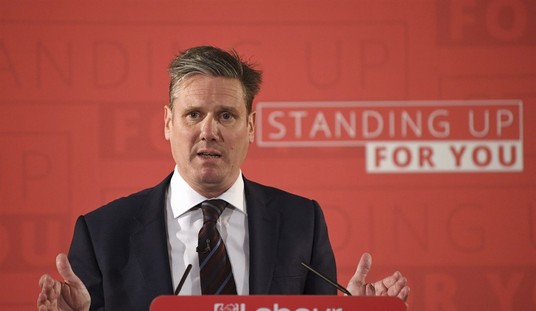
ObamaCare Arbitrage Party!!! Woo-Hoo!!

COMMENTS

  • Raven

    Therein lies the answer.

    In the 80s, they wrote Universal life insurance policies in such a way that sent them to court for lying to clients. A class-action case they settled by giving shares of their companies to their customers.
    They, and others, also raced to the bottom in prices and the top in benefits on Disability Insurance policies, not caring for the survivability of their companies. When costs came due, dozens of small companies collapsed and MetLife and Prudential all but pulled out of that branch of the market, jacking up rates on their current clients. The same has happened in LTC in the last decade or so.

    They are looking for profit NOW, now long term solvency.

    Better go find a company that behaves differently. I don’t know that there is one in group health coverage, though.

    • Repair_Man_Jack

      goes no further than the next earnings report. Possibly a motivting factor.

      • ss396

        Looking no further than the next earnings report was a growing phenomenon during the 80s and 90s when the Hahvard MBA types became the sought-after CEOs. In company after company, case after case, the top management was not being drawn from the operations’ ranks who’d fought their way to the top; instead, the top management was increasing recruited.

        And on they came with their numerical models, and computerized data analyses, and new paradigm languages. Company loyalty was not for this gang; oh no, they were and are strictly performance driven – and what better performance measures than company growth and the bottom line? I’ve long regarded this as the driving factor behind the plethora of mergers and acquisitions that clustered the late 80s and 90s.

        This was disastrous to so many companies, as they gradually realized that what they were doing was at best a short-term advantage, but a long-term confused nightmare. It took a long time for these brainiacs to learn that you really do need to know something about a business before you can run it. So the 2000s are littered with spin-offs, closures, failed ventures, contractions, and a retreat to the “core business” around which the companies were originally formed.

        It’s not all gloom-and-doom and there were successes that were realized this way. But it did change the investment horizon from decades down to years, and from years down to months. Who wants to take even a 2-year contract anymore? Nowadays the big players and the institutional investors look for the quick stock point advantage instead of business soundness, and are programmed to react at computer speed.

        Thus, the investment horizon is no longer time driven, the risks are no longer quantifiable, and the stock markets are not the investment vehicles that they were two decades ago.

        • Repair_Man_Jack

          I can tell you that they suck at portraying anything close to objective reality over a short time horizon.

          • Raven

            Who do it the old way. Who did it the old way even in the 80s and 90s, who look for long-term profit and solvency.

  • lineholder

    First, a lot of what is happening was predicted in the Holtz-Eakin report to Congress back in 2010.

    http://finance.senate.gov/imo/media/doc/031611dhetest.pdf

    One of the trends that has been unfolding since then has been that private health insurance companies are buying physician’s practices, getting into areas of business pertaining the wellness and preventive health care clauses in O-Care, and even in some cases, buying hospitals and clinics. (If you need links, I think I still have a file. I’ll get them for you, but right now I’m pulling from memory). Given projections of future losses in the health insurance arena, rather than go entirely out of business, they’re investing capital elsewhere. So yeah, if they get a chance to pull extra income out of this deal that they can invest elsewhere….

    • lineholder

      And this is just a curiosity point I’ve wondered about…if they can succeed in these other ventures, then cover the losses on the health insurance side by profits gained in these other ventures, is it possible that they could lower costs for health insurance?

    • Repair_Man_Jack

      They send patients to clinics they own. The clinics send the bill to their own payer. They send an inflated bill, which justifies a rate increase. The government then subsidizes that rate increase. God Bless America!

      • lineholder

        But it’s a business! If government generates a mandate that allows for business opportunity, they’re going to take it.

        If they don’t at least try to take that opportunity, they’re going down. Especially with the tactics and methods being employed by DHHS re: utilization of “the Secretary shall determine”. If they go down, where does that leave us? Do we want them to go down?

        • lineholder

          But as far as health insurance providers acting as a business is a concerned, the law is the law. It doesn’t matter whether they like it or not. They can’t hang all their hopes on repeal at this point.

          The healthcare industry has been using private insurance reimbursements rates to offset losses for Medicare and Medicaid patients for years. We have a national private practice doctor shortage. Private insurance enrollment has decreased during the past two years as unemployment has increased. Medicaid pays the lowest rate. A lot of doctors can’t afford to take on too many Medicaid patients, so they are withdrawing from accepting any of them. This is causing drastic increases of Medicaid patient treatments being provided in the local ER.

          Now, CMS has issued a ruling expanding Medicaid by 14 million people. (Even Graham is up in arms over this one, because of the costs that it shifts to the states). Between the medical loss ratio ruling, loss of grandfather clause protection, increasing unemployment (resulting in decrease in enrollment), the totally unrealistic scope of expectations coming out of CMS on issues such as ACOs, and the potential for massive, massive employer dumping as we get closer to 2014…they are looking at a no win situation. They’re being driven out of business, which was part of the purpose of these regs anyway to drive the need for a fully-integrated single-payer healthcare system.

          Do I like what health insurance companies are doing in this case? NO. But do I understand it? Yes. What’s more, if it keeps them in the game and buys us more time, I can live with it.

          16% of our GDP is tied up in healthcare. The private health insurance/healthcare industry has more skin the game by expanding at this point. I’d trust them as a business to pursue survival (which is to our benefit) before I’d trust the US government to spend money wisely any day of the week.

  • actuarius

    that “production costs” can be expected to rise 5%?

    As an aside, the premium increases for small group policies where there is an element of insurance (insurance companies are primarily administrators in large group) must be approved by the state insurance division.