What Did You Do This Saturday?


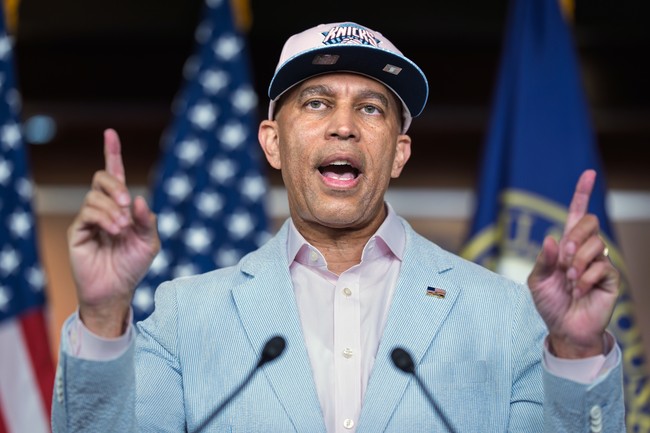
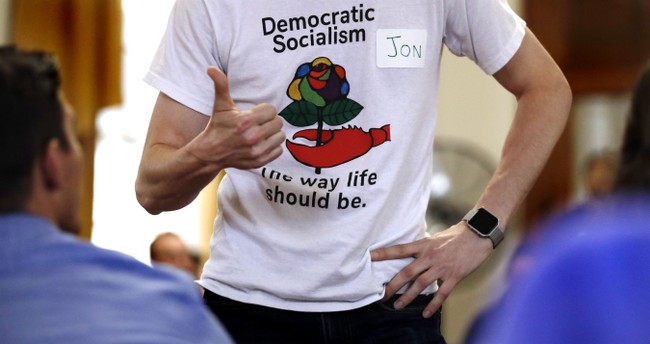
Patterico highlights how two different groups of people are spending today.

{Update} Appologies to anyone who I pushed off the front page, I clicked the wrong button.  This was supposed to be a RedHot.


Want to Cure Your State’s Budget Ills? Attract the Millionaires


If you live in a state that is having budget problems (Hint: You are living in a state that has budget problems), your legislature is probably trying to figure out how to fix said problems.  There’s lots of ways to do this, but only some of them actually make sense.  One of the politically least popular (especially in Purple to Blue states) is to cut taxes.  And when I say cut taxes, I mean cut, eliminate, end, cease, destroy taxes.  Why do this?

As Arthur Laffer (Yeah, the Laffer Curve guy) and Stephen Moore point out in the Wall Street Journal, people are sensitive to higher taxes {h/t QandO}.

Here’s the problem for states that want to pry more money out of the wallets of rich people. It never works because people, investment capital and businesses are mobile: They can leave tax-unfriendly states and move to tax-friendly states.

And the evidence that we discovered in our new study for the American Legislative Exchange Council, “Rich States, Poor States,” published in March, shows that Americans are more sensitive to high taxes than ever before. The tax differential between low-tax and high-tax states is widening, meaning that a relocation from high-tax California or Ohio, to no-income tax Texas or Tennessee, is all the more financially profitable both in terms of lower tax bills and more job opportunities.

Updating some research from Richard Vedder of Ohio University, we found that from 1998 to 2007, more than 1,100 people every day including Sundays and holidays moved from the nine highest income-tax states such as California, New Jersey, New York and Ohio and relocated mostly to the nine tax-haven states with no income tax, including Florida, Nevada, New Hampshire and Texas. We also found that over these same years the no-income tax states created 89% more jobs and had 32% faster personal income growth than their high-tax counterparts.

Re-read that last paragraph again.  1,100 people a day!  89% more jobs!  32% faster income growth!  Those aren’t insignificant numbers.  Those should be the big neon lights that even politicians can understand.  Who wouldn’t want to be the Speaker of the House, Governor, Senator, whatever who helped bring about that kind of success.  You’d practically be set for life (barring any, ahem, indiscretions).

What’s more is that many of these high tax jurisdictions are trying to make their taxes higher.  It’s almost like they are trying to give their Millionaires (and even Billionaires) away for free.

The Buffalo News: Golisano leaving New York to escape income taxes {h/t AoSHQ}

ALBANY — Ending any speculation about another possible run for governor, Rochester businessman and Sabres owner B. Thomas Golisano said Thursday he will be moving his legal residence to Florida to escape New York state taxes.

Baltimore Sun: Maryland plan to tax millionaires backfires {h/t Dan Mitchell}

But as the state comptroller’s office sifts through this year’s returns, it is finding that the number of Marylanders with more than $1 million in taxable income who filed by the end of April has fallen by one-third, to about 2,000. Taxes collected from those returns as of last month have declined by roughly $100 million.

NY Daily News: Conservative radio host Rush Limbaugh says he’ll leave New York over Gov. Paterson’s tax increases

Rush Limbaugh, the conservative talk show king, announced this week that he’s ditching his New York digs and finding another alternate location for his top-rated show in the wake of Gov. Paterson’s “stupid, punitive, massive tax increases.”

So, message to the rest of the states: Cut your taxes.  Better yet, eliminate your income tax.  I know.  It sounds crazy.  I assure you, you will find other ways to fund government.  Heck, that many incoming Millionaires is sure to spur economic growth.  Economic growth means sales taxes, property taxes, etc, etc, etc.

In a related message, Bill Whittle has a message for the millionaires: Leave Now.  His message is to the nation-at-large, but the notion is the same.  This punish the rich mentality will only be at the detriment of the jurisdiction raising the taxes while benefiting those jurisdictions with low taxes.


McCracken on St. Louis


mccracken

(Click to view video.  Opens in new window/tab.)

A lot of people here in St. Louis are up in arms over this campaign ad released by Brewster McCracken, a candidate for Mayor of Austin, TX.  McCracken levels some harsh reality.  St. Louis once was one of the premier cities in the United States.  As he says, we hosted the Olympics and the Worlds Fair in the same year.  We once had a very large industrial base [which with the announcement that Chrystler will close both plants in Fenton has pretty much sunk to next to nothing].  Over the past few decades though, things have gotten bad.

Drive Highway 70 from the county towards downtown.  Once you pass the airport, you see the side of the highway littered with abandoned buildings.  Businesses are leaving the City for the County in droves [St. Louis is one of those cities where the County and the City are wholly separate government entities.].  People who live in the County now only venture downtown for sporting events.

So what has been one of the dominate factors as to why St. Louis has been declining for decades?  One party rule.

The Democrats have had exclusive control over the office of Mayor of St. Louis since 1949.  That’s 60 years of a political party that makes decisions based on what gets them elected, not what will encourage new business and entertainment opportunities to move downtown.


CNN Hackery Nothing New


Wait til you see this!

There has been no shortage of digital ink on the despicable reporting on CNN by Susan Roesgen.  Here at RedState alone:

Objective CNN Reporter to Chicago Tea Party Attendee: “Why Are You Complaining? Don’t You Know Obama Gave Your State Billions in the Stimulus!?” - Jeff Emanuel

We Have a Winner! Absolutely, Positively WORST Tea Party Day Coverage in the Galaxy - Skanderbeg

Don’t Expect to See Jon Stewart Rail on Susan Roesgen Again - Moe Lane

A CNN Reporter’s Selective Outrage - Josh Painter

Avoiding Criticism: CNN Shuts Down Anti-Tea Party Reporter’s Email Address - Warner Todd Huston

And that is just on the front page.  There are dozens of other diaries along with hundreds of comments on this topic (including this diary that has video from the Founding Bloggers on what happend after CNN stopped rolling it’s cameras).

It’s important to keep in mind, that despite the networks slogan of being “The Most Trusted Name In News” (and who doesn’t love hearing Darth…er…James Earl Jones’s booming voice saying that?) they really have not earned that trust.

You see, back in the first Gulf War, CNN covered the “War in the Gulf” like no other network: They faked it.

That’s right.  That was actually aired on CNN.  {I know, I thought it was a spoof myself.}  That is none other than St. Louis’s own (KTVI Fox 2 and KTRS 550) hack Charles Jaco.  [Jaco has been a bit of hack on the Tea Parties himself: reporting the false narrative of astroturfing, calling us whiners on his radio show, and various other liberal talking points.]

So, when people start to wonder where CNN’s credibility has gone.  I wonder when they ever had it.


Mandating Higher Health Costs


Imagine you are a Doctor.  You are fed up with the current situation in the health care market, so you decide to do something about it.  You see lots of people who lack health insurance.  Because of this they are forgoing needed trips to the doctor for regular check ups, ect.  You decide that you will set up a plan whereby uninsured patients pay you a monthly access fee and then a very low co-pay when they actually come in for a visit. [Astute observers will recognize that this is essentially concierge medicine.  This is likely to be one of the ways that a market based system will solve the problem of the uninsured.]  Your idea opened up a way for patients to get access to care that they did not have before.  This is an achievement to be celebrated.  Or not?

The state of New York has determined that this very practice runs afoul of their insurance regulation.   You see, in the state of New York only licensed insurance companies have the right to charge flat rates for unplanned medical expenses.  As a result, Dr John Muney has had to dramatically raise his rates that he charges for unplanned procedures and abandon the monthly access fee.

The result of these regulations is that hundreds (if not thousands) of people being served at Dr Muney’s clinics in New York now no longer have access to affordable health care.  Isn’t that what advocates of government control were fighting for?

This highlights something I have been saying for a while.  Our health care problem will not be solved by mandating health insurance (or replacing private insurance with government run insurance).  The same disincentives to create innovative ideas like Dr Muney’s will exist under either option.  That leaves us with the false choice of the current situation or the equally bad “universal” health care.  Dr Muney created an option that required no subsidization by government.  And he did it while still making money.  What was wrong with that?


If the Death Tax Wasn’t Bad Enough Already


Legislators in the state of Oregon have proposed a tax on the distribution of a life insurance policy’s death benefit.

Oregonians who purchase life insurance and annuity products to assure the financial security of themselves and their loved ones would be hit with a tax that undermines their carefully-made financial protection, long-term savings and retirement income. H.B. 2854 would impose a tax on the life insurance benefits received by Oregon families suffering the death of a loved one. It would also impose a new tax on savings through life insurance and annuities.

This strikes me as monumentally stupid.  I understand that Oregon (like many other states) is suffering a budget crunch, but this has to be one of the least sensitive decisions that has been (or yet to be) made.  Why would you, at a time of deep grieving, want to make the problem worse by telling the family of a deceased individual that the government has to take it’s cut of your forsight to plan for your loved one’s early demise.  This is yet another case of government punishing those who act responsibly.


MO-Sen: Who Is John Weaver?


The Washington Post’s Chris Cillizza highlights the (presumed) race for the Republican nomination to face Robin Carnahan for Senate in 2010. In the piece he introduces information that Sarah Steelman is talking to campaign stratagists. He mentions by name former McCain advisor John Weaver.

Blunt was the first Republican in the race to replace Sen. Christopher S. Bond (R), who is retiring after three terms, but Steelman is almost certain to run and is in talks with top national party strategists, including John Weaver, who was a top campaign adviser to Sen. John McCain. (Steelman endorsed the Arizonan for president in 2000 and 2008.)

“Sarah Steelman is a breath of fresh air for our party,” Weaver said. “However I’m involved, I’m sure this conservative reformer will be the next senator from Missouri.”

My first reaction: “Who?”

Well, fortuantely for me (and the rest of you) Google is my friend. Here’s what we know about John Weaver:

Maybe it’s just me, but I don’t think that bullet points number two and five speak highly of an individual who would be your head strategist. Leaving the party and then having the balls to say “our party” is a bit much. And if I was Steelman, I would take one look at the first half of McCain’s campaign and say no thanks to Weaver.


Earmark Issue Opens the Door For Steelman


After Senator Claire McCaskill’s comments about earmarks (and the glaring hypocrisy of those comments), Congressman Roy Blunt said something that I believe leaves no doubt that former State Treasurer Sarah Steelman will challenge him for the Republican nomination to the Senate seat being vacated by Senator Kit Bond.

“I’ve never been nearly as effective at this topic as Sen. Bond, who’s fought hard for our state,” Blunt said in a radio interview with talk radio host McGraw Milhaven Wednesday morning. “But I certainly wouldn’t be the person to say I’m not going to be out there competing for things that are good for Missouri.”

“I would hope that Claire would change her mind on this,” the former House Minority Whip added.

Read More →


McCaskill’s Hypocrisy


Senator McCaskill has somehow managed to position herself in the eyes of the general public as a fiscally minded politician.  I’d say a healthy part of that comes from her time as the State Auditor here in Missouri.  People tend to think of the Auditor as a position of someone who knows what is and what isn’t good spending.  McCaskill is definitely trading on that experience.

Read More →


The Future of Health Care: Aligning Incentives


All over the country, people (on both the left and the right) are trying to figure out how we are going to solve the problem of health care.  The choices run the gamut from free market solutions to full government take-over of the funding and running of the health system.  What is often forgotten in the debate is discovering what the problem really is.

Currently, you do not directly pay for your health care (unless you happen to be uninsured and pay full price for your care).  A vast majority of Americans have their care paid for them through a third party entity such as Medicare, Medicaid or private insurance.  Aside from the issues coming from of someone else controlling your medical decisions, this situation creates very perverse incentives in the health care market.

You see, you are no longer the customer in the health care transaction in the current system.  Someone else is paying.  They get to be the one who gets catered to and have their needs (not yours) attended to. [Yes, I do realize that ultimately you are paying in the case of private insurance, but circumstances over the past two decades or so have made it so that the private health insurance market has simply become a parrot of the government funded portion of the sector.]  Often times this means that health care is rationed, not by your choices on what you want and what you can afford, but by a (for all you care) nameless and faceless bureaucrat who is looking out for the interests of the entity he works for.  You see, the incentives in the system aren’t necessarily to make you better or get you the care you want at a price you are willing to pay.

How do we fix this?  We realign the incentives.

The introduction of the Health Savings Account (when coupled with a qualifying High Deductible Health Plan) was the first step in this process, or at least it should have been.  As originally designed, the HSA takes the decision making power out of the third party’s hands and places it back in the hands of the consumer (under the advisement of the health care professional).  It was also intended that the HSA would cut out the insurance company in all but the most necessary of functions - actually acting as insurance instead of claims processing.  The insurance company’s role was to underwrite the risks of having health care costs higher than the deductible while leaving anything under the deductible to the discression of the consumer.  [Obviously, the insurane company would still play part in tracking the costs to determine when their liability kicked in.]

Instead, the HSA has been somewhat gutted.  This has been done by both those in policy making positions (by requiring that health insurance companies go through a process of certifying that funds qualify as expenditures under IRS rules - something that is actually done at the register already at time of service when the HSA debit card is used) andy by health insurance executives (who seek to maintain their revenue streams by adding in many of the features of regular insurance that should have been eliminated like office copays).  What that has done is limited the effectiveness of the HSA as a tool in changing the health care landscape.  Instead of triming out all of the wasteful steps of the current process, the current stakeholders have found a way to reinsert the waste to their benefit.

The HSA (restored to its original intent) is just one example of how to realign the incentives in the health care industry.  Another way is to offer discounts or penalites for certain actions.

The City of Kennesaw, Georgia is doing just that.  They are implementing a system where employees who take steps to better their health (lose weight and stop smoking) will avoid a penalty of increased out of pocket on their health insurance.

If Mayor-Council passes the recommendation by the benefits committee, which is composed of city employees, smokers who choose not to participate in the city’s wellness program will pay an additional $25 per pay period. High risk employees not participating in the program will pay an additional $50 per pay period. The city’s 233 employees are paid every two weeks, and 125 are attending wellness programs offered by the city.

Kennesaw dropped traditional health insurance coverage about four years ago. It went with a self-funded model in which premiums go toward paying claims and establishing a catastrophic health care fund from which large expenses are paid.

The City, under advisement of a council of employees, found a way to realign incentives so that individuals bear the cost of their decisions.  When a system does that, an individual now sees not just a physical benefit but a monetary benefit to positive actions.  The consumer is empowered to either make the choice to better their life in the program or pay the additional premium.  It’s their choice.  They control the outcome.

Only by finding other ways to realign the incentives in the current system will we be able to truly effect health care reform.  Universal health care does not do this.  It would merely replace the current set of bureaucrats with a new set of bureaucrats.  Not exactly the change we deserve.


Missouri News and Notes 02-06-09


Here’s some of the bigger goings-on in the Show-Me State.

Read More →


What Criteria Are They Using?


Much has been written over the past few weeks on the impending stimulus pork-laden, debt bill.  Unfortunately, it seems that the Democrats in charge of the Senate see fit to ram this bill down the throats of the American public.  With that in mind, I’m wondering what criteria they are using when they consider projects.  I wonder this, because I’ve been reading through the spending requests made by the U.S. Conference of Mayors on StimulusWatch.org.

The mayors of the State of Missouri have submitted 403 projects with a price tag of a whopping $3,760,293,491.00.  Several of these projects are set to fund the Metrolink system in the St. Louis metro area.  There is a lot to like about Metrolink (especially the fact that you can park in better lots than you can find downtown when you go to a sporting event), but why should the City and County of St. Louis expect other states to foot the bill for these projects?

You see, St. Louis County residents recently rejected an additional sales tax that would have been used to fund Metrolink.  Doesn’t it seem a bit odd to ask someone else to pay for something your own citizens won’t pay for?


Stimulus Plan Bails Out Insurance Companies


The Heritage Foundation has pointed out that the pending stimulus legislation includes a provision in it that would subsidize COBRA to the tune of $30.3 billion. For a quick primer (or reminder for those who know what COBRA is), let’s see how the U.S. Department of Labor defines the program:

The Consolidated Omnibus Budget Reconciliation Act (COBRA) gives workers and their families who lose their health benefits the right to choose to continue group health benefits provided by their group health plan for limited periods of time under certain circumstances such as voluntary or involuntary job loss, reduction in the hours worked, transition between jobs, death, divorce, and other life events. Qualified individuals may be required to pay the entire premium for coverage up to 102 percent of the cost to the plan.

There are other provisions to the plan, but this is the one that is central to the discussion. The new $30.3 billion subsidy would cover 65% of the cost of a COBRA plan (or roughly cover enough to keep the individual or family paying what they were before they lost group coverage).

There are two major problems with this.

  1. What is this doing in a “stimulus” package? I understand that money is fungible, but I’m really not sure how this is supposed to create short term growth in the economy. These funds will be spent on a product that is defensive in nature. Insurance (despite being necessary if you want to avoid bankruptcy after an ER visit) doesn’t really create growth. It may avoid negative growth, but if that was the goal of the stimulus plan we are in much worse shape than even the most pessimistic amongst us thinks.
  2. Once you get past problem number one (we’ll skip the whole debate on whether or not the government should subsidize health care for now), there are a lot of better options out there than COBRA for most people. COBRA plans are expensive (because they are just the continuation of your expensive employer-sponsored health plan). Yes, for those with health conditions it is the best option until they can either secure new group coverage or qualify for a high risk pool in their state. For everyone else though, it is money spent on a product that the could find an alternative to for much less. If (Yes, big if) a subsidy for health care was a useful way to stimulate the economy, why not expand the subsidy? Let those who lose their group coverage use the subsidy for any insurance plan. This way the individual/family gets to pick the best plan for them. If they want to save their money and go for a slimmer, less benefit packed plan then they should be able to. That would at least lead to less money spent on defense, leaving extra dollars in that family’s hands to spend on other goods and services.

Point number 2 leads directly into the problem of government funded (partially or wholly) health care. When they write the check, they make the rules. They pick the winners and losers. Not you. They pick what qualifies as acceptable insurance under the funding plan. You want that low cost high-deductible health plan and Health Savings Account (HDHP/HSA) that might save you money that you can spend else where? Too bad. The government isn’t going to help you with that. If you want the money you accept the strings.

So, who has the government decided wins in this scenario?

The health insurance companies. Group insurance makes up the vast majority of revenue for nearly every insurance company out there. It is how they get the revenue (that they then invest when not needed to pay out claims - that’s how they really make their profits). By enticing more people into spending more money than they would on their own, the government has just handed a $30.3 billion gift to the insurance industry.

This is why the government has no business being involved in the business of health.

Category: , ,

Technology


Take a look at the picture below:

img

(Click to enlarge)

This is a map of the relationship network of Congressional members who are on Twitter. It’s pretty easy to look at this map and get really pumped up: The Republicans “win”. The problem is that GOP dominance of Twitter doesn’t mean anything if it doesn’t add up to votes.

This map (and I guarantee, the reaction of many who see that picture) is really the problem in the GOP right now. Many think that all we have to do is bridge the technology gap and the GOP can return to power in Congress and retake the Presidency in 2012/2016 with ease. This just isn’t true. We weren’t defeated by technology in the race for President (or any other race for that matter). We were beaten in the basic game of attracting people to your message.

Over on The Next Right, Patrick Ruffini goes into a lengthy explaination. I suggest you read it all.

Until Republicans learn the lesson that “technology” is not the answer, we may be in for a long time in the wilderness.


MO-Sen: Rounding Up the Potential Candidates


Brilliant state roundup. Fronted by Erick. But don’t forget to put the state in the tags or it won’t show up on the state blogs.

With the announcement from Missouri’s Senior Senator Kit Bond, there is going to be something that hasn’t happened in Missouri for a very long time: a race for an open Senate seat in Missouri.  This has sparked some major interest, both here in Missouri and nationally as everyone starts to watch the jockeying for who will be the junior Senator. {Ugh, this means that Classy Claire McCaskill will be our senior Senator from Missouri.}  Here’s the rundown of those who are or ought to be considered for the post.

Read More →

Category:

Massachusetts Provides Further Example of How Not to Solve Health Care


Promoted from the Diaries by Jeff.

Under former Governor Mitt Romney, the state of Massachusetts undertook the largest single step towards single payer health care of any government entity in the United States to date.  It has created a myriad of problems, chief of which is a massive headache for those who are now forced to pay for insurance that they never wanted or can’t afford.  The plan, in a nutshell, requires all Massachusetts residents to purchase a state approved private health insurance plan or pay into a state run plan.  This mandatory purchase law, with concurrent restrictions on what qualifies as “insurance”, has lead to the nation’s largest increases in premium.

Read More →


Missouri News and Notes January 5, 2008


A round up of the recent news from the twenty fourth state.

http://upload.wikimedia.org/wikipedia/commons/thumb/5/5a/Flag_of_Missouri.svg/800px-Flag_of_Missouri.svg.png

Read More →


Taking Technology to the Next Level: Flip4.org Officially Launches


Conservative voices all over the internet have been engaged in a discussion of the future of technology in the Republican party. [One such piece is the one put up by David Hinz earlier today.] With that in mind, I want to echo the statement of Tim Goddard over at The Next Right:

Only when technology is put to the pursuit of specific goals and in support of excellent candidates can it be successful.

One perfect example of this wise use of technology is the new project Flip4.org. The site officially went live today. They have the very ambitious target of turning 15 state bodies from Blue (or tied) to Red.

For the 2010 elections, we’re targeting the following legislatures, where Democrats hold a majority of seven or fewer seats, and a flip of four seats will transfer control:

  • The Alaska Senate, split 10-10
  • The Colorado Senate, held by the Democrats 21-14
  • The Delaware Senate, held by the Democrats 24-17
  • The Indiana House, held by the Democrats 52-47
  • The Maine Senate, held by the Democrats 20-15
  • The Mississippi Senate, held by the Democrats 27-25
  • The Montana House, split 50-50
  • The Nevada Senate, held by the Democrats 12-9
  • The New Hampshire Senate, held by the Democrats 14-10
  • The New York Senate, held by the Democrats 32-19 (sort of)
  • The Ohio House, held by the Democrats 53-46
  • The Oregon Senate, held by the Democrats 18-12
  • The Pennsylvania House, held by the Democrats 104-99
  • The Wisconsin Senate, held by the Democrats 18-15
  • The Wisconsin House, held by the Democrats 52-46

These 14 chambers provide us with the challenge of finding and electing 60 talented, principled, forward-thinking Republican candidates on November 2, 2010. The challenge begins today–join us!

I would encourage anyone interested in the future of the GOP to get involved in this (or another project like this). We have to improve our farm team if we are going to be able to compete year after year with the Democrats. A well targeted effort like Flip4.org is exactly what is needed.  The only thing that I regret about this particular project is that Missouri is not on the list (but the GOP controls both houses here so I don’t feel too bad).

http://img529.imageshack.us/img529/4499/tmrxlogo1dw7.jpg


Blackwell/Benkisser Form Ticket for RNC Chair


This is an interesting development in the race for the RNC Chairmanship.

What many people do not know is that when the RNC meets in January to elect their Chairman they will also elect a Chairwoman. Why the Chairwoman has been relegated to meaningless status I can’t answer. The position does exist though. Ken Blackwell, former Ohio Secretary of State (boy, wouldn’t you have rather had him in there instead of that miscreant ruining OH election laws right now), has formed a ticket with Texas GOP Chairman Tina Benkiser. They have both endorsed each other and are campaigning to be the Chairman and Chairwoman of the RNC together.

Blackwell penned the following letter to the members of the RNC:

Dear RNC Member,

Today we are very pleased to make the most important announcement of the campaign for RNC Chairman. I am pleased to announce that Texas GOP Chairman Tina Benkiser and I will be running together as a ticket for the positions of Chairman and Co-Chairman of the Republican National Committee, respectively.

I wholeheartedly endorse her candidacy for Co-Chairman and thank her for her support.

This is clearly exciting news for our campaign. But I am ever more excited about the potential to work with Tina to lead our party to victory in 2010. She has been of the very best state party chairmen in the country and has the values and principles that we need in party leadership. She offers a vital perspective of what state party organizations across the country need from the RNC in order to be effective.

I am thrilled at the prospect of working her, and for you, next year. Please take a moment of your time to read this important letter from Tina Benkiser.

Sincerely,

Ken Blackwell

This is actually a great move for Blackwell (and most likely for Benkiser too). I think it goes a long way on the part of Blackwell to help elevate the co-chair position to actual prominence to highlight that the Republican party is inclusive of all races, sexes, etc. Show the country that we view things in a matter of quality and not their class and this move could be one step towards breaking down the traditional strength of voting blocks.

Kudos to Blackwell and Benkiser. [Or Perrier as our good friend Caleb Howe says.]


Missouri News and Notes 12-17-2008


Another dose of the news roundup.

Read More →

Category: